
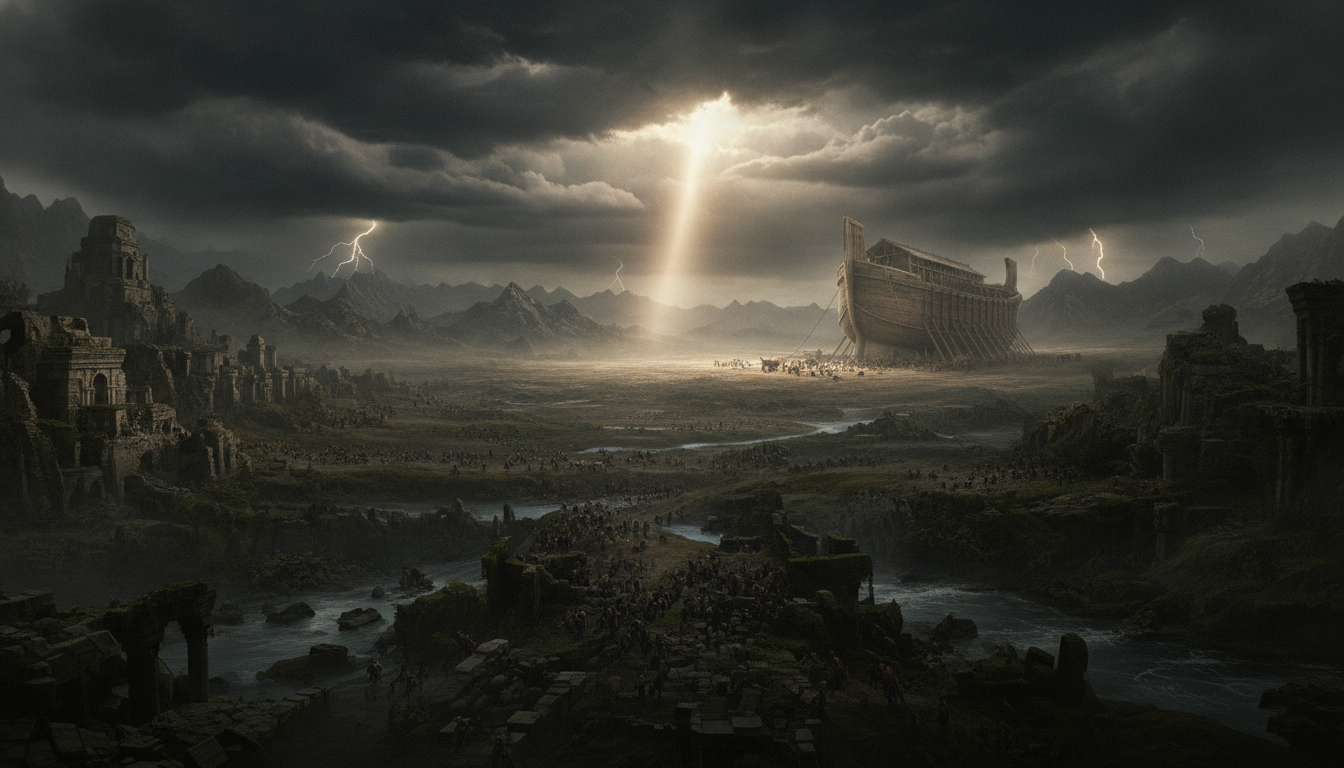
If you read the account of Noah’s flood, one question almost immediately rises to the surface: why would God destroy the entire world with a flood?
To many readers, this event feels extreme—especially when viewed through a modern lens that associates judgment mainly with punishment or anger. But Scripture presents something far deeper than a simple act of destruction. The flood reveals a consistent biblical pattern: God warns, God offers salvation, and God judges only after persistent human rebellion.
To understand Noah’s flood, we need to understand the world that led up to it—and the character of the God who sent it. At Noah’s time, it was a world that had reached a breaking point. Genesis describes the condition of humanity in stark terms:
“The LORD saw how great the wickedness of the human race had become on the earth, and that every inclination of the thoughts of the human heart was only evil all the time.”
Genesis 6:5
This scripture is not describing isolated wrongdoing. It is describing a moral collapse at a global scale. The text continues:
“Now the earth was corrupt in God’s sight and was full of violence.”
Genesis 6:11
The picture is one of unchecked corruption, violence, and moral distortion spreading through society. Humanity was not merely struggling with sin—it had become saturated in it. At this point, the Bible introduces a critical truth: God does not act impulsively.

One of the most important principles in scripture is found in the book of Amos:
“Surely the Lord GOD does nothing, unless He reveals His secret to His servants the prophets.”
Amos 3:7
Before God acts in judgment, He first speaks. This pattern is consistent throughout the Bible, as we saw in Sodom and Gomorrah and the story of Lot’s wife. God’s judgment is never random and never without prior revelation, as we see in many Bible stories:
- Noah was warned long before the flood arrived.
- Abraham was informed before Sodom was judged.
- Moses was sent before the plagues came upon Egypt.
- Prophets warned Israel and Judah before exile.
- Jesus warned Jerusalem before its destruction.
In the case of Noah’s flood, the warning came in the form of both words and action. God told Noah to build the art, and the ark itself stood as a visible, decades-long warning that judgment was coming and salvation was available. While Noah built the ark, Scripture describes him as a “preacher of righteousness” (2 Peter 2:5), meaning the world was given enough time to respond by repentance.
Judgment Is Not What People Often Think It Is
In modern thinking, judgment is usually equated with punishment. But in Scripture, judgment is more complex. It is not merely retribution—it is the righteous action of God bringing truth, justice, and moral order into a corrupt situation. Even more importantly, God’s judgments often serve a restorative purpose. The writer of Hebrews explains:
“For whom the Lord loves He chastens, and scourges every son whom He receives.”
Hebrews 12:6
And again:
“He disciplines us for our good, that we may share in His holiness.”
Hebrews 12:10
This reveals something essential: divine discipline is not rooted in hatred, but in love aimed at restoration. Even in judgment, God’s ultimate desire is not destruction but correction. This is made even clearer in Ezekiel:
“As surely as I live… I take no pleasure in the death of the wicked, but rather that they turn from their ways and live.”
Ezekiel 33:11
God’s heart is not to destroy, but to call people back to life. Judgment, therefore, is not the opposite of salvation—it is often the means through which salvation is made clear, necessary, and possible.
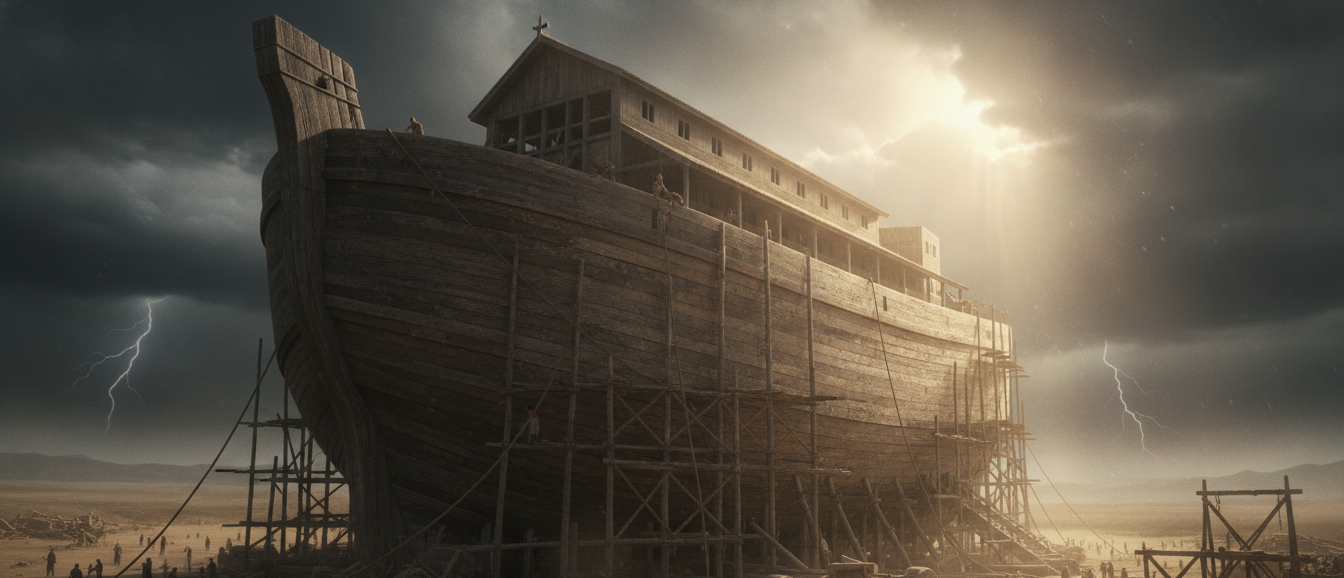
The flood is often remembered as an act of destruction, but Scripture also presents it as an act of preservation. As Peter reflects on Noah’s time, he writes that:
“God waited patiently in the days of Noah while the ark was being built… In it only a few people, eight in all, were saved through water.”
1 Peter 3:20
The emphasis is striking: God waited patiently, salvation was available and only those who responded were saved. The ark was not only a vessel of escape—it was an invitation into safety while judgment approached. This reveals a consistent biblical principle: before judgment, God provides a way of salvation.
The flood was not the first expression of God’s will. It was the final response after long patience, repeated warnings, and people’s continued rejection of righteousness.
Why Noah Was Saved
Genesis offers a simple but profound statement about Noah:
“But Noah found favor in the eyes of the LORD.”
Genesis 6:8
Noah was not without sin. Rather, he was faithful in a generation that had turned away from God. In contrast to widespread corruption, Noah responded to God’s word with obedience. His life became a living contradiction to the world around him. And through Noah, God preserved not only a family—but the continuation of His redemptive plan for humanity.
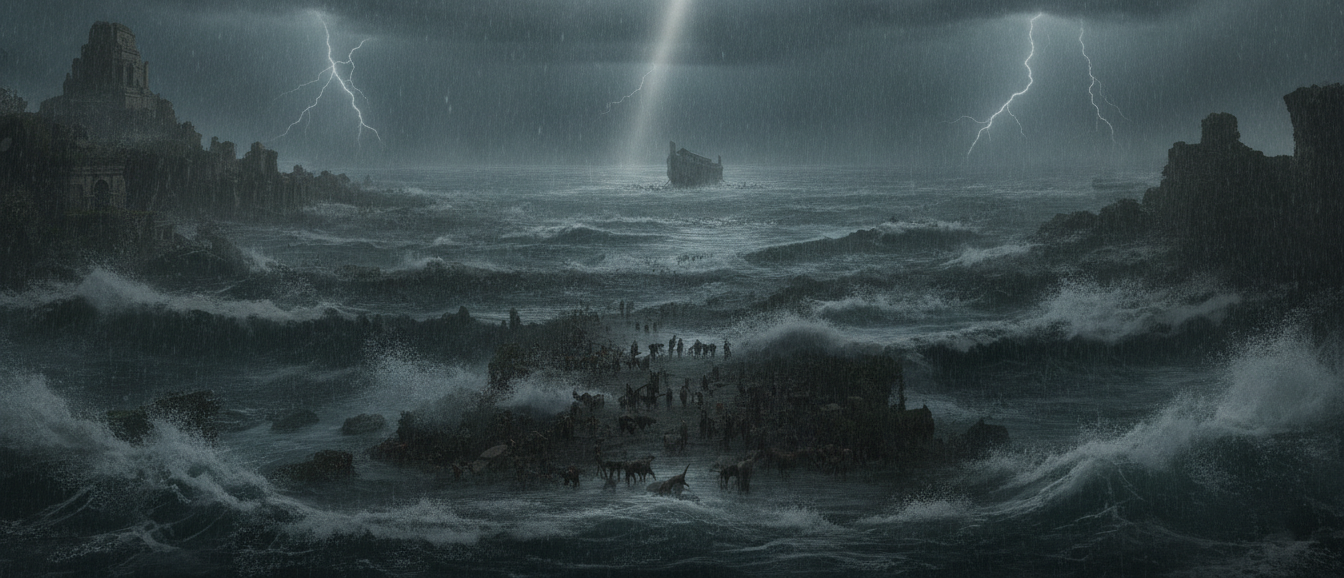
When we combine these passages, a clearer picture emerges:
- God sees corruption and injustice.
- God speaks through warning before acting.
- God provides a way of escape before judgment.
- God does not delight in destruction.
- God disciplines in order to restore.
- God preserves those who respond in faith.
The flood is not an isolated story. It is part of a repeated pattern throughout Scripture. Judgment is never the first word. It is always preceded by warning. And it always exists within a larger redemptive purpose.

The account of Noah’s flood raises further questions that are not immediately resolved in a surface reading of the text:
- How extensive was the flood?
- Was it global in scope, or regional in extent?
- What does Scripture mean when it describes “all the earth”?
- How does the flood relate to other acts of divine judgment in history?
- Why does water function as the instrument of judgment in this event?
These are not secondary details—they shape how we understand the scale and meaning of the flood itself. In our Bible study, we explore these questions in depth, carefully examining the language of Scripture, the theological patterns across the Bible, and the implications of a global versus regional interpretation.

The flood was not an act of uncontrolled anger. It was the culmination of a long process of patience, warning, and invitation—followed by righteous judgment on a world that had become overwhelmingly corrupt. Yet even in judgment, God provided salvation.
The ark stands as one of the clearest pictures in Scripture of this truth: God judges sin, but He also provides a way of escape. This pattern does not end with Noah. It continues throughout the Bible—and ultimately points forward to God’s ongoing call for humanity to turn back to Him while mercy is still available.