Unlock the Bible

Find God and Truth in Scripture

Tag: Bible explained

  • How Does God Speak to People?

    How Does God Speak to People?

    While we are living our lives, we don’t know the future and we often make mistakes. We might find ourselves, asking, if God, who is omnipotent, knew that I was going to make a mistake, why didn’t He warn me? Or we might think, if God foresaw an accident, why didn’t He prevent it by stopping me from going there? We wonder if God speaks to us or not.

    The answer might not lie in God’s responsibility, but in ours. Throughout the Bible, God speaks to His people in various ways. Just as God says to one of the prophets,

    Surely the Sovereign Lord does nothing
        without revealing his plan
        to his servants the prophets.

    Amos 3:7

    Yet, in the current times that we are living in, there don’t seem to be any prophets to whom God speaks directly. We might consider our pastors as people who know God’s direction, but can they confidently tell us which direction we must go in? Or can our church leaders prevent us from getting into accidents by warning us beforehand?

    Sometimes we can rely on them, but the Bible also shows us other ways in which God speaks to people. In this post, let us look at some major ways in which God reveals His will to us. You might find that if you tune into God’s frequency, God has many things to say to each of us.

    God’s Word

    One of the main ways God speaks to people is through His word. In the Bible, the four gospels all contain Jesus’ words and instruction on how we need to live to be children of God. According to the Bible, God is the word:

    In the beginning was the Word, and the Word was with God, and the Word was God.

    John 1:1

    And God’s word was made flesh through the coming of Jesus:

    14 The Word became flesh and made his dwelling among us. We have seen his glory, the glory of the one and only Son, who came from the Father, full of grace and truth.

    John 1:14

    Therefore, for the best instruction and wisdom, we can simply read the four gospels. In fact, some historical figures have made important choices that influenced the outcome of nations, based on Jesus’ words. One of the most famous is Abraham Lincoln, who read that,

    25 Jesus knew their thoughts and said to them, “Every kingdom divided against itself will be ruined, and every city or household divided against itself will not stand.

    Matthew 12:25

    Based on a revelation from reading this scripture, the US President Lincoln realised that America might enter a civil war if he does not abolish slavery. Lincoln then instituted the Emancipation Act, which eventually led to the ban on slave trade in America.

    Dreams

    Another fascinating phenomenon is dreams, which appear over 100 times in the Bible. Perhaps one of the most famous dreamers is Joseph. According to the Bible, Joseph had two significant dreams. After sharing his dreams with his brothers, they sold him to Egypt as a slave:

    Joseph had a dream, and when he told it to his brothers, they hated him all the more. He said to them, “Listen to this dream I had: We were binding sheaves of grain out in the field when suddenly my sheaf rose and stood upright, while your sheaves gathered around mine and bowed down to it.”

    Genesis 37:5-7

    Joseph’s second dream is similar to the first:

    Then he had another dream, and he told it to his brothers. “Listen,” he said, “I had another dream, and this time the sun and moon and eleven stars were bowing down to me.”

    Genesis 37:9

    A few chapters later, while Joseph is in prison after Potiphar’s wife wrongly accuses him of assaulting her, he interprets the dreams of the baker and the King’s cup-bearer:

    So the chief cupbearer told Joseph his dream. He said to him, “In my dream I saw a vine in front of me, 10 and on the vine were three branches. As soon as it budded, it blossomed, and its clusters ripened into grapes. 11 Pharaoh’s cup was in my hand, and I took the grapes, squeezed them into Pharaoh’s cup and put the cup in his hand.”

    12 “This is what it means,” Joseph said to him. “The three branches are three days. 13 Within three days Pharaoh will lift up your head and restore you to your position, and you will put Pharaoh’s cup in his hand, just as you used to do when you were his cupbearer.

    Genesis 40:9-13

    Finally, when Pharaoh, King of Egypt, has a dream that can change the fate of his nation, Joseph interprets it for him and saves Egypt from a severe 7-year famine. Because of his deeds, Pharaoh makes Joseph Prime Minister of Egypt, and 21 years later, his dreams about the grain and the stars are fulfilled.

    In this way, if human beings are able to interpret the dreams that God sometimes gives us, it can change the course of our lives. In fact, a meaningful dream could even save our lives, or the lives of our families or nations. Of course, the issue of dreams is interpreting them accurately, like Joseph does.

    Nature

    Finally, the Bible also mentions instances where animals or plants helped central figures realise God’s will. Perhaps one of the strangest events is where Balaam’s donkey speaks to him. The prophet Balaam is on his way to prophesy against Israel, when an Angel with a flaming sword appears and blocks his way. Balaam’s donkey keeps acting out, until it finally opens its mouth and speaks:

    27 When the donkey saw the angel of the Lord, it lay down under Balaam, and he was angry and beat it with his staff. 28 Then the Lord opened the donkey’s mouth, and it said to Balaam, “What have I done to you to make you beat me these three times?”

    Numbers 22:27-28

    This revelation is strange, because, of course, we know that animals do not speak. There are other accounts of animals also speaking to human beings, such as the snake that famously tempts Eve:

    Now the serpent was more crafty than any of the wild animals the Lord God had made. He said to the woman, “Did God really say, ‘You must not eat from any tree in the garden’?”

    Genesis 3:1

    Another interesting story is that of Jonah. Jonah is famous for the whale swallowing him, but something else significant happens in the book of Jonah. Jonah realises God’s love for Nineveh after a worm eats the leaf he uses for shelter. God makes a plant grow and makes it disappear the next day, and then speaks to the prophet:

    10 But the Lord said, “You have been concerned about this plant, though you did not tend it or make it grow. It sprang up overnight and died overnight. 11 And should I not have concern for the great city of Nineveh, in which there are more than a hundred and twenty thousand people who cannot tell their right hand from their left—and also many animals?”

    Jonah 4:10-11

    In this way, throughout the Bible, there are accounts of God (and even the Devil) using creation to speak to people and deliver important messages. But how does this apply to our lives? Our pets do not speak to us with words, but we do understand them by their body language and behaviour.

    So does God still speak to people through creation, dreams and the Bible?

    What makes many of these Biblical stories difficult to apply to our lives is that they seem very extreme. Most of us are not presidents of nations that need to receive revelations to alter the fate of our countries. Our dreams are hardly significant beyond our immediate lives. And does God still use creation to communicate as He did thousands of years ago?

    They key point is not, however, our position or influence in the world. What is important is that God is always broadcasting His love to us and He wants us to respond. As it says in Jeremiah,

    ‘Call to me and I will answer you and tell you great and unsearchable things you do not know.’

    Jeremiah 33:3

    How can we call to God and respond to Him? We need to know His methods of communication.


    Would you like to know how God is calling you?

    Join our online Bible study and we will explore all the methods God uses to communicate with us. You might even find our how a donkey and a snake can speak, and how to interpret your dreams!

  • What Type of Language Does God Use?

    What Type of Language Does God Use?

    The Bible is a mysterious book full of parables and strange sayings. It is the bestseller in the world, yet no-one really understands what it is saying. There are many reasons for this, and some say that the Bible is not meant to be understood. Because of a warning in Revelation, various Christian denominations say that we should not interpret the Bible but take everything at face-value:

    18 I warn everyone who hears the words of the prophecy of this scroll: If anyone adds anything to them, God will add to that person the plagues described in this scroll. 19 And if anyone takes words away from this scroll of prophecy, God will take away from that person any share in the tree of life and in the Holy City, which are described in this scroll.

    Revelation 22:18-19

    Yet, as many people as there are that have read the Bible, so many interpretations of it exist. Even if we read the Bible literally, that is still a way to interpret it. In fact, the same is true with any piece of literature. When we read something, we draw conclusions about it whether we do so intentionally or not.

    In the gospel of Matthew, after Jesus explains to the disciples why he uses parables, it says something interesting:

    34 Jesus spoke all these things to the crowd in parables; he did not say anything to them without using a parable.

    Matthew 13:34

    This scripture states that Jesus did not say anything without using a parable. But is that really true? If so, we must take every word that Jesus spoke not literally, but as a parable. This, of course, has profound implications for how we interpret not only Jesus’ words, but the entire Bible. In this post, let’s look at some of the interesting language God and Jesus use in the Old and New Testament.

    Images of nature

    One of the things that is mentioned a lot in the Bible is nature. There are many mentions of things like trees and mountains, sometimes in strange contexts. In the New Testament, there is a weird encounter between Jesus and a fig tree.

    18 Early in the morning, as Jesus was on his way back to the city, he was hungry. 19 Seeing a fig tree by the road, he went up to it but found nothing on it except leaves. Then he said to it, “May you never bear fruit again!” Immediately the tree withered.

    Matthew 21:18-19.

    The encounter of the same event is recorded slightly differently in the gospel of Mark:

    12 The next day as they were leaving Bethany, Jesus was hungry. 13 Seeing in the distance a fig tree in leaf, he went to find out if it had any fruit. When he reached it, he found nothing but leaves, because it was not the season for figs. 14 Then he said to the tree, “May no one ever eat fruit from you again.” And his disciples heard him say it.

    Mark 11:12-14

    This scripture is confusing for various reasons. Some might say that this was recorded in the Bible to show that Jesus wielded power over nature. Indeed, the disciples are shocked after they see this, even though the account in Mark does not record their shock:

    20 When the disciples saw this, they were amazed. “How did the fig tree wither so quickly?” they asked.

    Matthew 21:20

    But does Jesus need to make a fig tree wither in order to impress his disciples? The account in Mark says that the tree only had leaves “because it was not the season for figs”. So why should the tree be cursed and never bear fruit again simply because it was out of season? Moreover, Jesus’ rebuke even seems harsh and uncalled for; why was Jesus so upset about a fig tree without fruit?

    Moving Mountains

    After the disciples’ response, Jesus continues with one of the most famous scriptures in the New Testament:

    21 Jesus replied, “Truly I tell you, if you have faith and do not doubt, not only can you do what was done to the fig tree, but also you can say to this mountain, ‘Go, throw yourself into the sea,’ and it will be done. 22 If you believe, you will receive whatever you ask for in prayer.”

    Matthew 21:21-22

    Despite being an oft-quoted scripture, this scripture is even more confusing than the fig tree. In the history of humankind, there has not been one person that has thrown a mountain into the sea with their faith. Not even Jesus prayed and moved a mountain while he was alive. Does that mean that no-one on earth has enough faith to move a mountain? Earlier, Jesus also speaks about mountains:

    20 He replied, “Because you have so little faith. Truly I tell you, if you have faith as small as a mustard seed, you can say to this mountain, ‘Move from here to there,’ and it will move. Nothing will be impossible for you.”

    Matthew 17:20

    A mustard seed is miniscule, yet no faithful person on earth has ever moved a mountain with their faith. There is no record in the Bible of prophets, Kings, or even Jesus himself, moving mountains. Still, Jesus says it can be done. If we think back to Matthew 13:34, we might find some answers. If everything Jesus said is a parable, perhaps these words are parables that we must interpret too.

    Images of Animals

    In addition to images of trees and mountains, the Bible also mentions many animals. Like the scriptures about the fig tree and moving mountains, the scriptures that talk about animals can be pretty confusing too. One of the famous prophecies for the Lord’s coming in Isaiah mentions that all animals will get along.

    The wolf will live with the lamb,
        the leopard will lie down with the goat,
    the calf and the lion and the yearling[a] together;
        and a little child will lead them.
    The cow will feed with the bear,
        their young will lie down together,
        and the lion will eat straw like the ox.

    Isaiah 11:6-7

    As we explored in the debate on science versus religion, this scenario seems unlikely. Another scripture in the Old Testament speaks of a hornet that will go on ahead of the Israelites and drive out the Canaanites:

     28 I will send the hornet ahead of you to drive the Hivites, Canaanites and Hittites out of your way.

    Exodus 23:28

    The hornet is mentioned again a few books later as the Israelites enter Canaan:

    20 Moreover, the Lord your God will send the hornet among them until even the survivors who hide from you have perished.

    Deuteronomy 7:20

    While it does seem plausible that a swarm of hornets could drive the Canaanites out of their homes, the Bible does not record such an event. Instead, the Bible speaks of Joshua and his army destroying each of Canaan’s city-kingdoms one-by-one.

    The NEw Testament

    Jesus also spoke about animals many times throughout his ministry. One of the most miraculous animal encounters involves Peter and a fish. When the Pharisees ask Peter if he and Jesus pay temple tax, Jesus has an interesting solution for their problem. Jesus tells Peter:

    27 “But so that we may not cause offense, go to the lake and throw out your line. Take the first fish you catch; open its mouth and you will find a four-drachma coin. Take it and give it to them for my tax and yours.”

    Matthew 17:27

    The story ends here and we never know if Peter found money in a fish’s mouth. Jesus also spoke about dogs and pigs in another oft-quoted scripture:

    “Do not give dogs what is sacred; do not throw your pearls to pigs. If you do, they may trample them under their feet, and turn and tear you to pieces.

    Matthew 7:6

    And Jesus compared King Herod to a fox:

    31 At that time some Pharisees came to Jesus and said to him, “Leave this place and go somewhere else. Herod wants to kill you.” 32 He replied, “Go tell that fox, ‘I will keep on driving out demons and healing people today and tomorrow, and on the third day I will reach my goal.’

    Luke 13:31-32

    In some cases, such as the comparison between Herod and a fox, the type of language Jesus uses is obvious. But in other cases, such as Jesus’ confusing statement about asking Peter to look for money in a fish’s mouth, it is less clear. Even more baffling is Isaiah’s prophecy about the ideal world, and God’s statement that he will send a hornet into Canaan to drive out the locals.

    What Does it all Mean?

    In this post, we only looked at a few scriptures. But for those who have read the Bible, you will know that these only scratch the surface of confusing scriptures and parables. What these scriptures do point to, though, is a specific language that God and Jesus use. As Jesus states in Matthew 13:34, the prophet Ezekiel says something similar:

    49 Then I said, “Sovereign Lord, they are saying of me, ‘Isn’t he just telling parables?’”

    Ezekiel 20:49

    These statements ask us to rethink the way we interpret (or refuse to interpret) scripture. People use parables and figures of speech in their language and in literature all the time, and we understand them when they do. Perhaps, with regards to the Bible too, we must open our eyes to the beautiful poetic and literary language God and Jesus use.


    Would you like to know what these scriptures refer to?

    Join us for our weekly online Bible study where we study the scriptures and uncover the hidden parables in the Bible.

  • Can Science and Religion Co-Exist?

    Can Science and Religion Co-Exist?

    An issue that has plagued Christianity for centuries is the question of whether science and religion can co-exist. Before the Enlightenment in the 17th century, people took the Bible as fact and absolute truth. However, as people started to study the empirical world, a rift started to grow between science and religion.

    Why so? Because scientific discovery oftentimes directly contradicts the Bible. For example, Isaiah says that when the Lord comes,

    The wolf will live with the lamb, the leopard will lie down with the goat, the calf and the lion and the yearling together; and a little child will lead them.

    Isaiah 11:6

    But, when one looks at the unique anatomy and instincts of animals, this passage seems to contradict the ways in which nature works. In order for a healthy ecosystem to exist, and in order for there to be balance in the world, predatory animals need to eat herbivores. If lions and leopards suddenly started eating grass, their species would be wiped out and lambs and goats would become overpopulated.

    In this post, we will look at two parts of the Bible that seem to directly contradict what science says, and try to navigate these issues through scripture. Let’s start at the very beginning, which is a much-debated topic: the creation of earth and the universe.

    seven days of creation

    In Genesis, the very first book of the Bible, it famously describes God creating the world in seven days. The Bible also clearly says that God created everything and that nothing simply sprang out of existence:

    1 In the beginning God created the heavens and the earth.

    Genesis 1:1

    The Bible then goes on to explain what God did on each day of creation. On the first day, God made light and dark, or day and night:

    God called the light “day,” and the darkness he called “night.” And there was evening, and there was morning—the first day.

    Genesis 1:5

    Then, on the second day, God separated the water on the earth from the water in the sky:

    God called the vault “sky.” And there was evening, and there was morning—the second day.

    Genesis 1:8

    On the third day, the Bible says, God made the continents and separated them from the seas. On this day, God also made the plants and vegetation.

    12 The land produced vegetation: plants bearing seed according to their kinds and trees bearing fruit with seed in it according to their kinds. And God saw that it was good. 13 And there was evening, and there was morning—the third day.

    Genesis 1:12-13

    On the fourth day, God made two lights, one to govern the day and one to govern the night. In essence, it is the creation of the sun and the moon:

    17 God set them in the vault of the sky to give light on the earth, 18 to govern the day and the night, and to separate light from darkness. And God saw that it was good. 19 And there was evening, and there was morning—the fourth day.

    Genesis 1:17-19

    Finally, on the fifth day, God created the fish in the oceans, and the birds that fly in the air, and God blessed them to multiply over the earth.

    22 God blessed them and said, “Be fruitful and increase in number and fill the water in the seas, and let the birds increase on the earth.” 23 And there was evening, and there was morning—the fifth day.

    Genesis 1:22-23

    Then, on day 6, God made the mammals and right at the end, human beings. God also blessed all the creatures and humans to multiply and increase in number. Finally, at the end, it says that,

    31 God saw all that he had made, and it was very good. And there was evening, and there was morning—the sixth day.

    Genesis 1:31

    On day 7, God looks at all His amazing creation and rests. The Bible says that,

    Thus the heavens and the earth were completed in all their vast array. By the seventh day God had finished the work he had been doing; so on the seventh day he rested from all his work. Then God blessed the seventh day and made it holy, because on it he rested from all the work of creating that he had done.

    Genesis 2:1-3

    what does science say?

    Because of these scriptures, many people feel like there is a dilemma between science and religion. The biggest issue is, of course, that according to carbon dating and various scientific studies of the earth and the universe, the earth was created over 4.5 billion years and not merely seven days. The universe is even older: scientists believe that the Big Bang happened around 13.8 billion years ago.

    Another issue is scientific evidence of dinosaur fossils. Scientists believe that the dinosaurs roamed the earth for around 150 million years and before them various amphibians and sea creatures. Sharks are one of the oldest species on earth, having existed from over 200 million years ago, and so forth.

    This all seems impossible to consolidate, but the Bible does give us some clues on how to interpret these passages. For example, Peter reveals something interesting about how God calculates time:

    But do not forget this one thing, dear friends: With the Lord a day is like a thousand years, and a thousand years are like a day.

    2 Peter 3:8

    From this scripture in 2 Peter, we can denote that perhaps the Bible isn’t talking about days as we calculate it, but days as God calculates them. We must also remember that Genesis was given to Moses, who wrote it, as revelation. Moses, like any human being, was not present at the creation of the world. Only a few books later, in Joshua, there is another scientific anomaly.

    Joshua stopping the sun

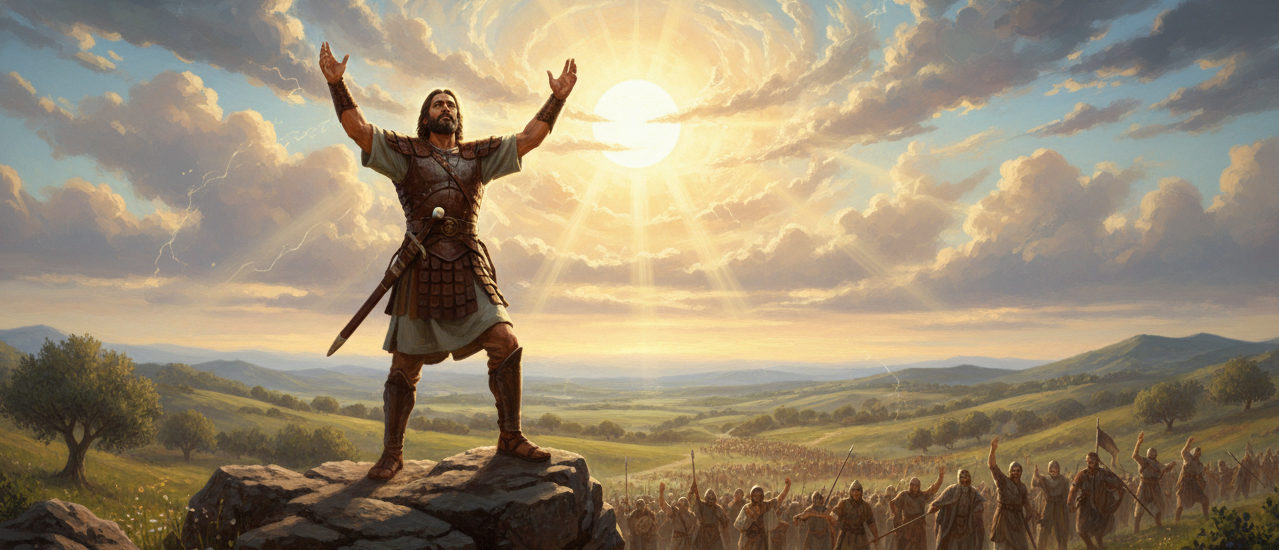
    In the book of Joshua, there is a scripture that has riddled theology and caused debate among scientists and religious people for decades. It is the famous story about Joshua stopping the sun:

    12 On the day the Lord gave the Amorites over to Israel, Joshua said to the Lord in the presence of Israel:

    “Sun, stand still over Gibeon,
        and you, moon, over the Valley of Aijalon.”
    13 So the sun stood still,
        and the moon stopped,
        till the nation avenged itself on[b] its enemies,

    as it is written in the Book of Jashar.

    The sun stopped in the middle of the sky and delayed going down about a full day. 14 There has never been a day like it before or since, a day when the Lord listened to a human being. Surely the Lord was fighting for Israel!

    Joshua 10:12-14

    This miracle is perhaps one of the greatest in the Bible, as it takes place on such a large scale. For any scientist, however, the notion of the sun standing still is ridiculous. As of the 16th century, it is generally accepted that the heliocentric theory is true: the earth rotates around the sun, which is stationary.

    Apart from Joshua simply stopping an object that already does not move, the notion of time stopping is pure science fiction. Many scientists might argue that it is impossible for time to stop for one person and not for anyone else, since there is no record in history of a day that has gone missing despite such claims by believers.

    Regarding this incident, the Bible gives us another clue on how to interpret such phenomena. In 1 Corinthians, Apostle Paul says something strange:

     For we know in part and we prophesy in part, 10 but when completeness comes, what is in part disappears. 11 When I was a child, I talked like a child, I thought like a child, I reasoned like a child. When I became a man, I put the ways of childhood behind me. 12 For now we see only a reflection as in a mirror; then we shall see face to face. Now I know in part; then I shall know fully, even as I am fully known.

    1 Corinthians 13:9-12

    What is interesting about this scripture is that Saint Paul speaks about not being able to see clearly in a mirror. In the 21st century, we have very clear mirrors that are the same as seeing face to face. However, in the Bronze Age, which is when Paul was alive, they used bronze plates for mirrors, which aren’t very clear. From Paul’s context, then, this comparison makes perfect sense.

    where does this leave us?

    From this discussion, we can discern two methods to consolidating science and religion. The first method is that we must look from God’s perspective and not from our own. The second is that we must read the Bible through the perspective of the time period. The scripture in Joshua took place around 3500 years ago. If we consider it from Joshua’s perspective, we might find that there is a reasonable explanation.


    would you like to know how joshua stopped the sun?

    Sign up for our weekly online Bible study sessions to find out how science and religion can be in harmony as we look at these scriptures and more.

  • What Makes People Different From Animals?

    What Makes People Different From Animals?

    A few days ago, I was faced with the difficult decision to put my cat to sleep or to continue to let her live. Since she was suffering, I ended up saying goodbye to her. As I was looking into her eyes at the moment of death, I was wondering whether she has a soul. If she has a soul, where does it go after death? On Facebook, I saw a post from someone who also lost her cat. She said: “How can I deal with this loss? Where does my cat go after death?”

    As animal lovers, we hope that pets go to an afterlife. We hope that after death, we can see our beloved pets again and live with them forever. But is this the case? Do animals exist beyond their time in this world? Perhaps we should first ask, do humans live forever after dying in the body? If both humans and animals can go to heaven, then what makes us any different from them? The wise Solomon had the same question:

    21 Who knows if the human spirit rises upward and if the spirit of the animal goes down into the earth?”

    Ecclesiastes 3:21

    This is a concept that scientists and religious people have grappled with for centuries. Join me as we unpack the philosophical implications of this debate and as we try to find an answer to the question: what makes people different from animals?

    what does the bible say about humans?

    Firstly, the Bible tells us that human beings consist of three distinct entities: a body, soul and spirit.

    23 May God himself, the God of peace, sanctify you through and through. May your whole spirit, soul and body be kept blameless at the coming of our Lord Jesus Christ.

    1 Thessalonians 5:23

    The Bible also says that the body has an absolute predestination: it is surely going to die.

    27 Just as people are destined to die once, and after that to face judgment,

    Hebrews 9:27

    But, of course, as human beings, we do not naturally have an urge to die and to end in nothingness. In fact, our bodies have an innate instinct to avoid danger and death. This makes sense. As the Bible tells us, God has given us the desire to live forever:

    11 He has made everything beautiful in its time. He has also set eternity in the human heart; yet no one can fathom what God has done from beginning to end.

    Ecclesiastes 3:11

    We also see this human longing to exist forever in literature, science-fiction and fantasy films, and in real-life scientific projects. The race of Elves in Tolkien’s classic, The Lord of the Rings, are immortal beings that dwell forever in “undying lands”. Humans are fascinated with vampires, as we can see by the popularity of movies like Twilight, Interview with a Vampire, and many more. We even entertain the idea of people that come back from the dead and live forever: Michael Jackson’s song, Thriller, which includes zombies, is a classic hit.

    In science-fiction films, like Ghost in the Shell and Blade Runner, human beings make androids that never die. We fantasize about the idea that our minds can be transferred into synthetic bodies and live forever. In Ghost in the Shell, even though The Major’s body is destroyed, her mind continues to exist on the Web. This longing for an existence that is not reliant on the biological body is intriguing, because if we didn’t have bodies, we’d never have to die.

    More Bizarre are real-life eternity projects like cryogenics. There have been experiments in which people who became terminally ill before their time froze their bodies in the hopes of resurrecting in a few decades. The government stores their bodies for thousands of dollars to bring them back to life when there is a cure for their disease.


    is there a part of us that lives forever?

    The Bible’s answer to this question is, yes, there is.

    42 So will it be with the resurrection of the dead. The body that is sown is perishable, it is raised imperishable; 43 it is sown in dishonor, it is raised in glory; it is sown in weakness, it is raised in power; 44 it is sown a natural body, it is raised a spiritual body. If there is a natural body, there is also a spiritual body.

    1 Corinthians 15:42-44

    If we continue to read 1 Corinthians 15, Apostle Paul tells us even more about the part of us that is “imperishable”:

    50 I declare to you, brothers and sisters, that flesh and blood cannot inherit the kingdom of God, nor does the perishable inherit the imperishable.

    1 Corinthians 15:50

    Finally, Apostle Paul gives us the answer we were looking for:

    53 For the perishable must clothe itself with the imperishable, and the mortal with immortality.

    1 Corinthians 15:53

    From these scriptures, it indeed seems that there is something very unique about human beings: there is a part of us that is immortal. Since we know that the physical body must die, according to Hebrews 9:27, we can be certain that the immortal part is the spirit.

    what does the bible say about animals?

    Next, let’s look at what the Bible says about animals. From the beginning of creation, God made animals and said that it was good.

    24 And God said, “Let the land produce living creatures according to their kinds: the livestock, the creatures that move along the ground, and the wild animals, each according to its kind.” And it was so. 25 God made the wild animals according to their kinds, the livestock according to their kinds, and all the creatures that move along the ground according to their kinds. And God saw that it was good.

    Genesis 1:24-25

    God then commands Adam to rule over the animals and says that He gave all the plants for the animals to eat:

    28 God blessed them and said to them, “Be fruitful and increase in number; fill the earth and subdue it. Rule over the fish in the sea and the birds in the sky and over every living creature that moves on the ground.” 29 Then God said, “I give you every seed-bearing plant on the face of the whole earth and every tree that has fruit with seed in it. They will be yours for food. 30 And to all the beasts of the earth and all the birds in the sky and all the creatures that move along the ground—everything that has the breath of life in it—I give every green plant for food.” And it was so.

    Genesis 1:28-30

    God also tells the Israelites to let their animals rest on the Sabbath, and to take care of them.

    10 “For six years you are to sow your fields and harvest the crops, 11 but during the seventh year let the land lie unplowed and unused. Then the poor among your people may get food from it, and the wild animals may eat what is left. Do the same with your vineyard and your olive grove. 12“Six days do your work, but on the seventh day do not work, so that your ox and your donkey may rest, and so that the slave born in your household and the foreigner living among you may be refreshed.

    Exodus 23:10-12

    The Bible clearly asks human beings to value and care for animals. However, nowhere does the Bible mention that animals have an “immortal” part, like humans do. We see many scriptures about people’s souls and spirits, but almost none about animals. We see even less scriptures talking about plants, unless they are in parables.


    humans are unique in god’s creation

    Throughout the Bible, it is clear that God’s focus is human beings. This is not to say that we should not value animals, and that we shouldn’t take care of the Earth that God gave us. Rather, it means that we have a unique relationship with God, which is that we can live with Him forever.

    Instead of worrying about my cat’s soul, I need to worry about my own. Perhaps we will see our beloved pets again in the afterlife, but this is not the core. What the Bible suggests is that humans have a longing to live forever, because God made us to live with Him for eternity.


    do you want to know more about why god loves people so much?

    Join us for free online Bible study as we explore what makes humans unique and what we need to do to live with God forever. You might also just find out what happens to your pet after they die, and much more.

  • Why Was Lot’s Wife Turned into Salt?

    Why Was Lot’s Wife Turned into Salt?

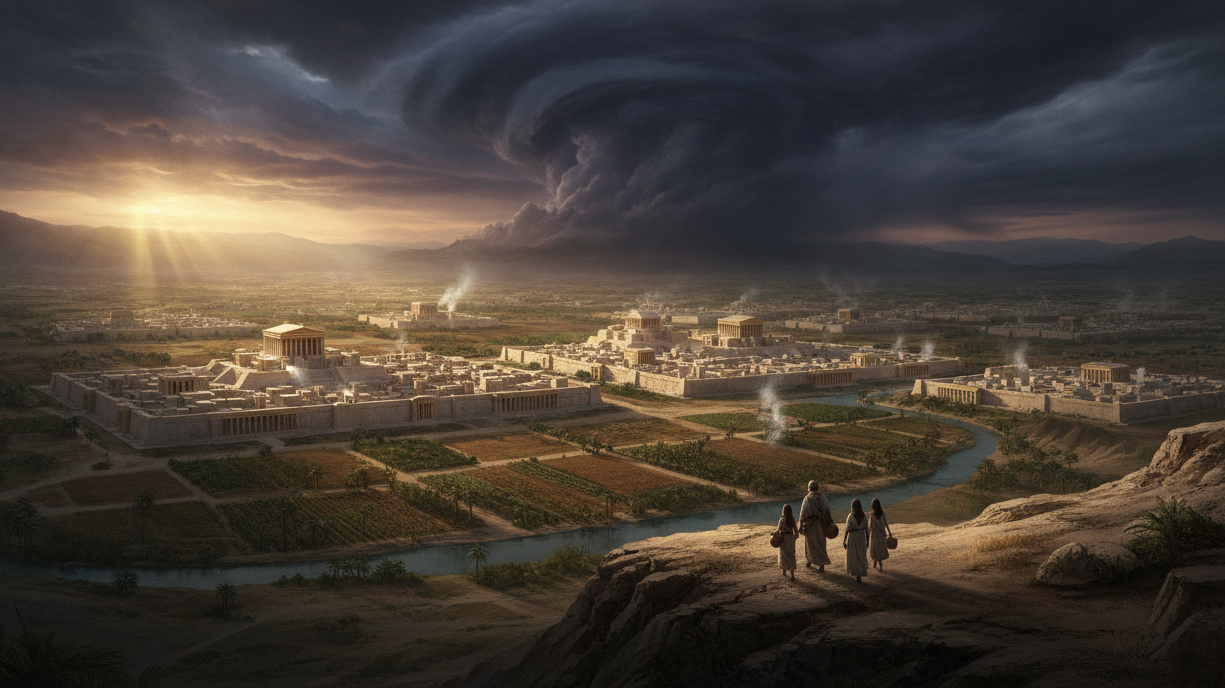
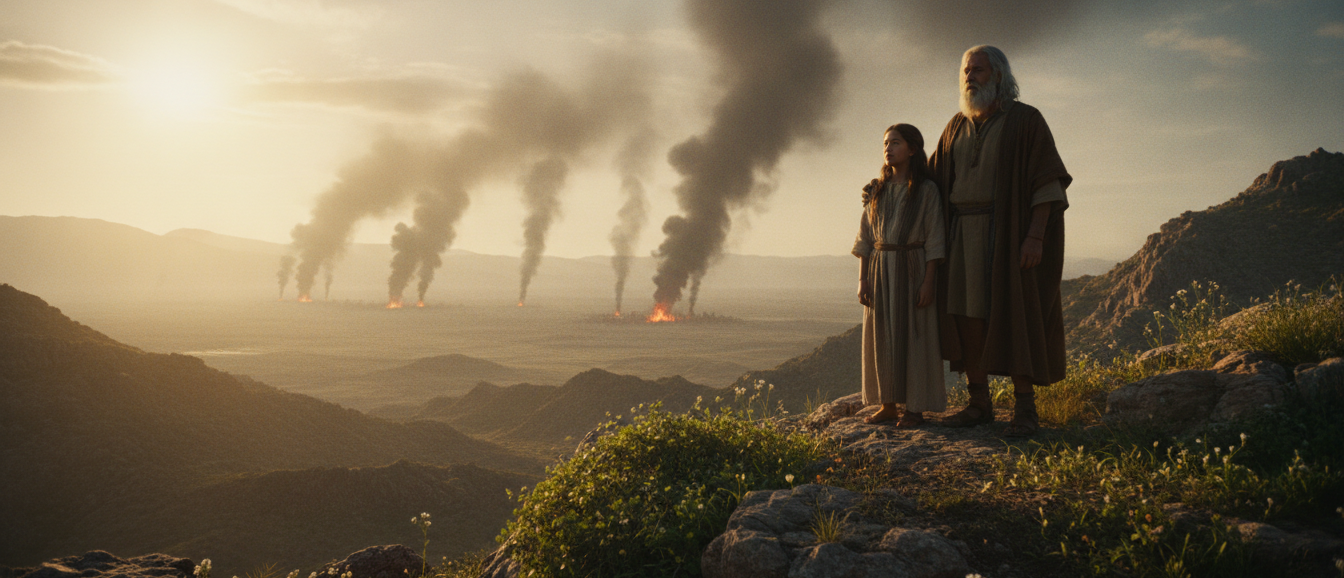
    Few events in the Bible are as startling—or as brief—as the account of Lot’s wife. Lot’s wife turning into a pillar of salt after looking back as God’s judges Sodom and Gomorrah is one of the Bible’s biggest mysteries. As God rescued Lot and his family from the doomed cities of Sodom and Gomorrah, they received one simple command:

    “Escape for your life! Do not look behind you, nor stay anywhere in the plain. Escape to the mountains, lest you be destroyed.”

    Genesis 19:17

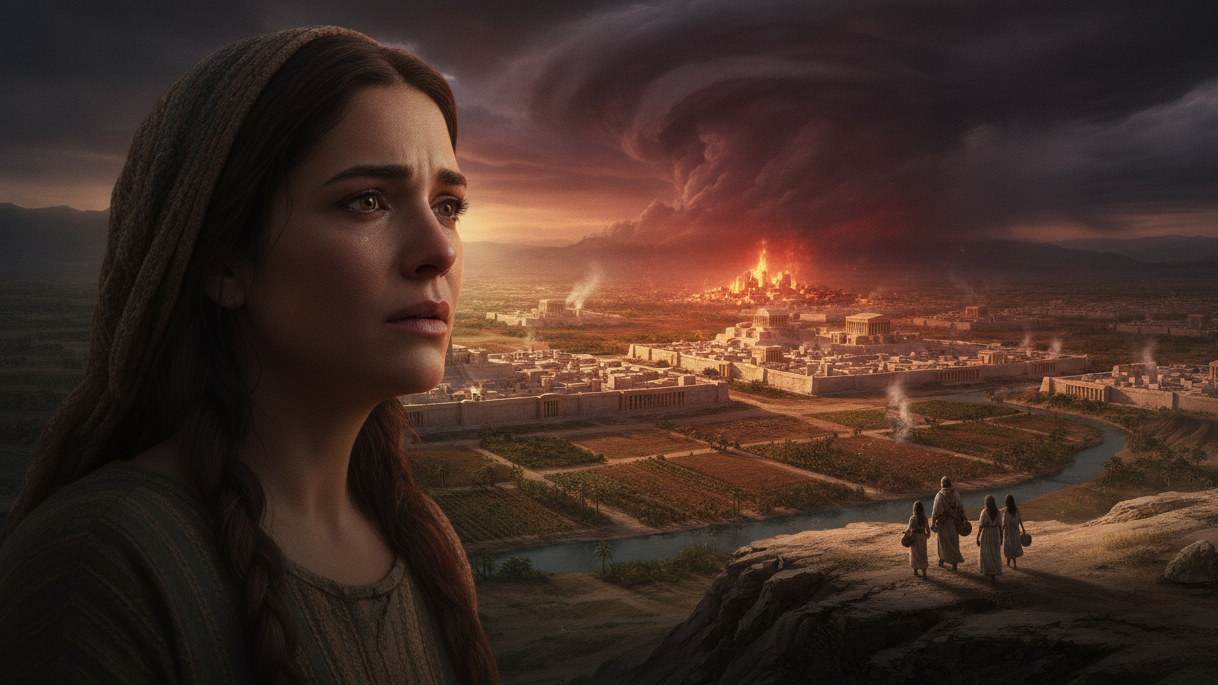
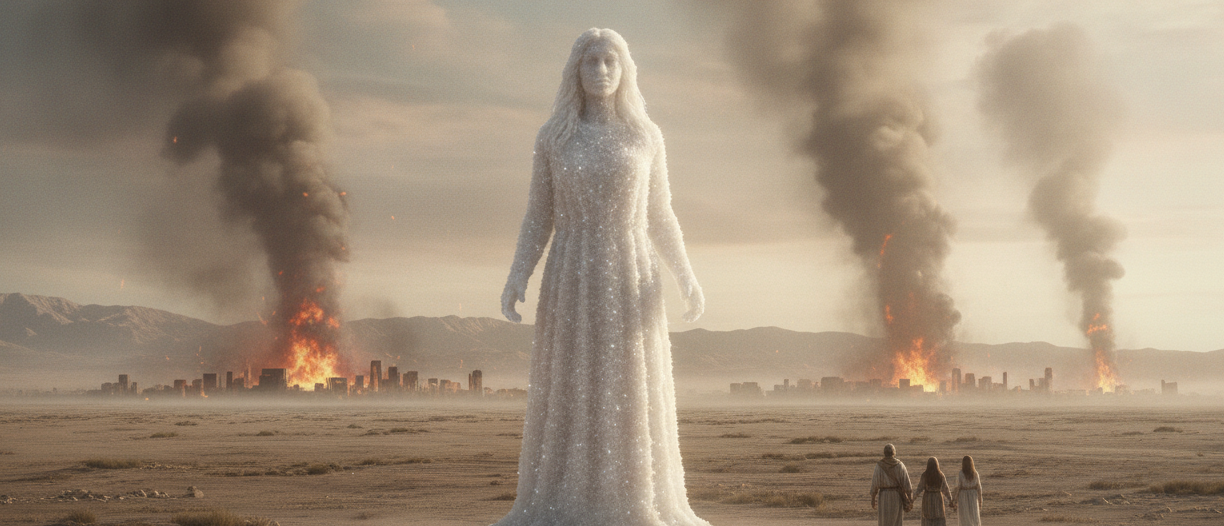
    Yet only a few verses later, we read that Lot’s wife did not obey God’s command and turned into a pillar of salt:

    “But Lot’s wife looked back behind him, and she became a pillar of salt.”

    Genesis 19:26

    But why would simply looking back result in such a severe judgment? Indeed, if our cities or houses were burning and we left behind many prized possessions, we might also look back. It seems that this brief event might be revealing something deeper about how God judges.

    To answer these questions, we must look beyond the surface of the story and understand the pattern of God’s dealings with humanity. In this post, we look at how God judges, how He warns His people, and we try to unpack the mystery of Lot’s wife.


    God does Not Judge Without Warning

    One of the great principles found throughout Scripture is that God reveals His intentions before He acts. God does not reveal them to just anyone, but to His people of mission. The prophet Amos writes:

    “Surely the Lord GOD does nothing, unless He reveals His secret to His servants the prophets.”

    Amos 3:7

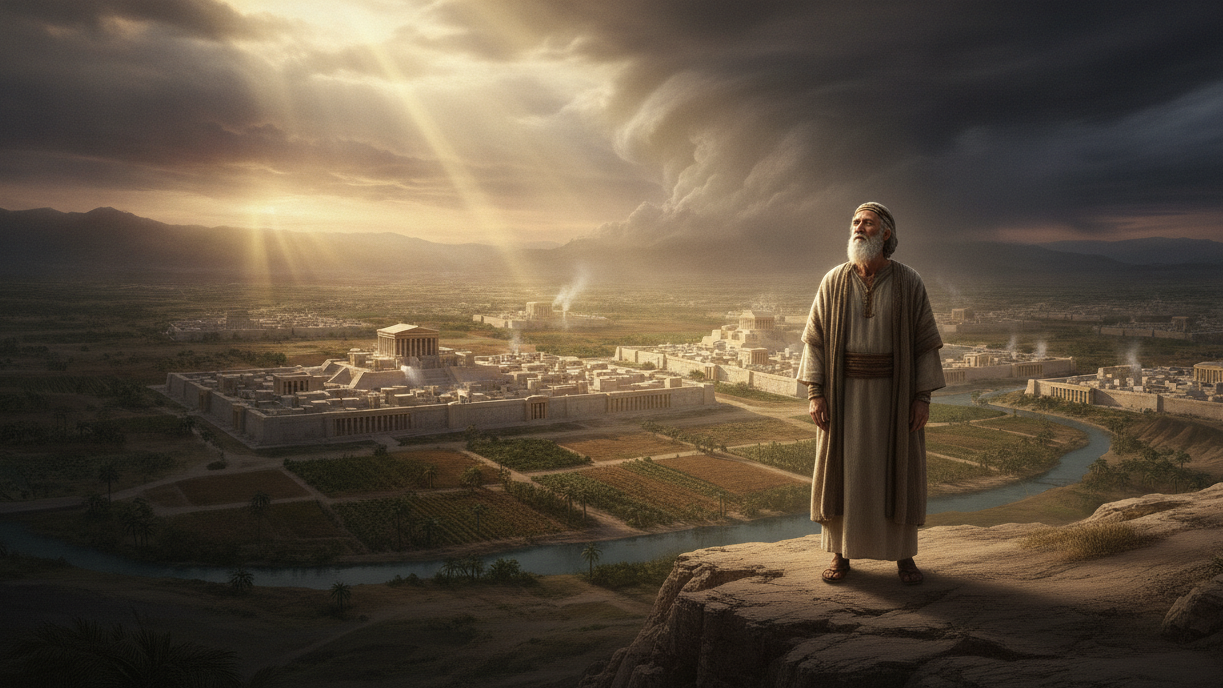
    In the same way, before Sodom was destroyed, God spoke with Abraham. In fact, God said:

    “Shall I hide from Abraham what I am about to do?”

    Genesis 18:17

    What follows is one of the most remarkable conversations in the Bible. Abraham intercedes for the city, asking whether God would spare it if righteous people could be found there. God agrees that He would, even if there were only ten righteous people in the city.

    This reveals something essential about God’s character. God is not eager to destroy, but rather, He is eager to save. Even as judgment approached, despite all the sins of the city, God was still listening to Abraham’s intercession and extending mercy.


    Sodom Had Reached the Point of Judgment

    Genesis describes the two cities, Sodom and Gomorrah, as exceedingly wicked. The Lord said to Abraham:

    “Because the outcry against Sodom and Gomorrah is great, and because their sin is very grave…”

    Genesis 18:20

    This “outcry” against Sodom and Gomorrah was not the result of a single act of wrongdoing. Like the world before Noah’s flood, the cities’ corruption had become deeply rooted. The prophet Ezekiel later explains that Sodom’s sins included pride, selfishness, neglect of the poor, and detestable practices.

    “This was the guilt of your sister Sodom: she and her daughters had pride, excess of food, and prosperous ease, but did not aid the poor and needy. They were haughty and did an abomination before Me.”

    Ezekiel 16:49–50

    God’s judgment therefore came after prolonged wickedness—not impulsive anger. We can imagine that God was sitting in Heaven, looking down at these cities for a long time before deciding to render judgment.


    God First Provided a Way of Escape

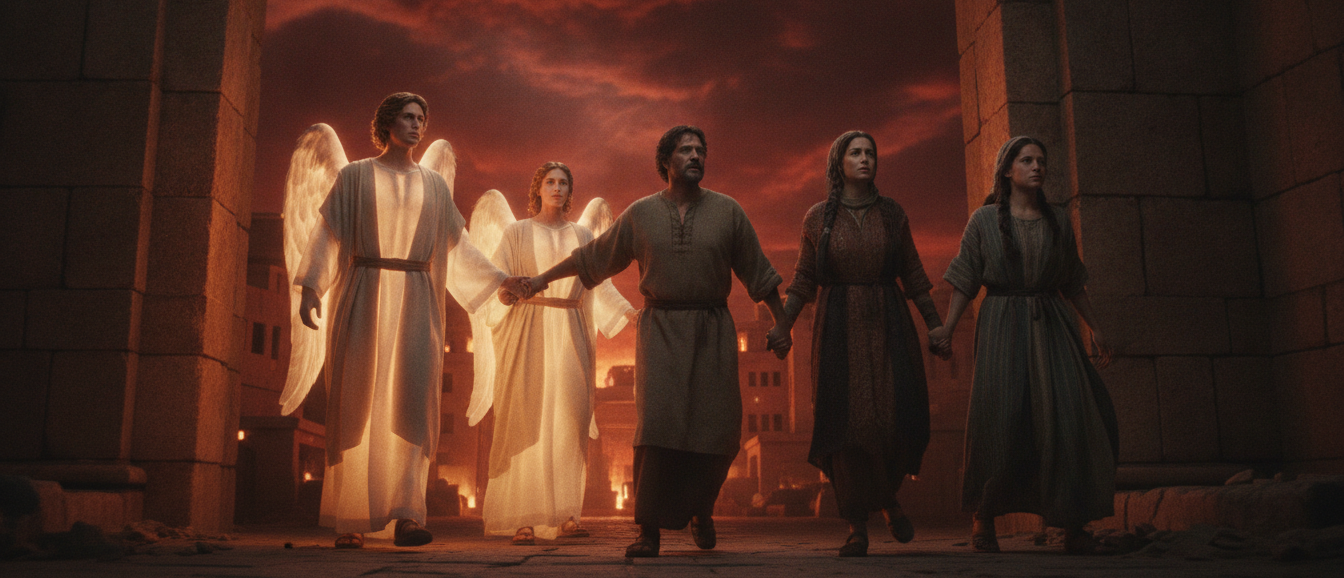
    In keeping with His methods of warning His people of mission first, before fire fell from heaven, God sent angels to rescue Lot and his family. As fire was falling from the sky, the angels urgently warned Lot and his family:

    “Up! Take your wife and your two daughters who are here, lest you be swept away in the punishment of the city.”

    Genesis 19:15

    Yet even then, Lot hesitated. Genesis tells us:

    “And while he lingered, the men took hold of his hand, his wife’s hand, and the hands of his two daughters, the LORD being merciful to him…”

    Genesis 19:16

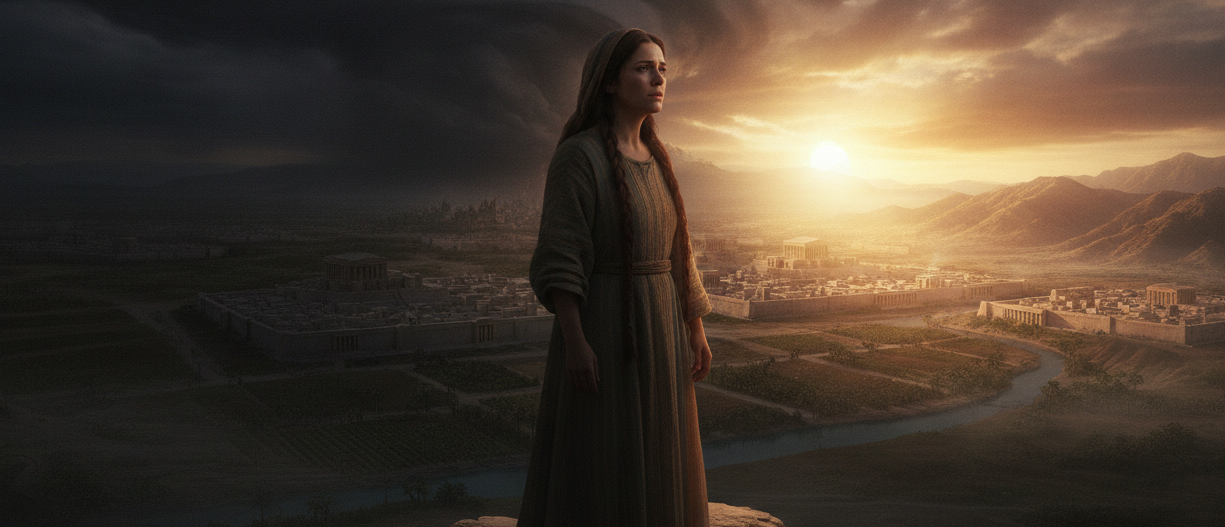
    What an incredible statement. This makes us reflect: if I were in Lot’s situation, would I also hesitate leaving everything behind? Would I also look back and watch all my life’s possessions burn?


    The rescue itself was an act of mercy.

    Even when Lot delayed, God reached out and led them toward safety. This pattern should sound familiar if you know the story of Noah and the ark. Before the flood, God provided the ark through telling Noah to build it. Likewise, before the destruction of Sodom, God provided an escape. In essence, before judgment comes, God provides salvation.


    What Did It Mean That Lot’s wife “Looked Back”?

    Many people imagine that Lot’s wife merely glanced over her shoulder and looked back. But the context suggests something much deeper. The command that God gave them was clear:

    “Do not look behind you.”

    Genesis 19:17

    The Hebrew idea behind “looking back” carries the sense of turning one’s attention or regard toward something, not just physically looking behind you. Jesus Himself explains the spiritual meaning centuries later. Speaking about His return, He gives a surprising warning:

    “Remember Lot’s wife.”

    Luke 17:32

    Why would Jesus tell His disciples to remember such a brief event? Because He immediately continues to say:

    “Whoever seeks to preserve his life will lose it, but whoever loses his life will keep it.”

    Luke 17:33

    Jesus reveals that Lot’s wife represents something far deeper than curiosity. She physically left Sodom, but her heart remained there. Her body was moving toward salvation, but her affections were still attached to the world she was leaving behind.


    A Warning About the Human Heart

    Not only in this story, but throughout Scripture, God is concerned not merely with outward actions but with the condition of the heart. Jesus taught:

    “For where your treasure is, there your heart will be also.”

    Matthew 6:21

    Lot’s wife had been offered deliverance. Yet at the critical moment, something behind her still held her attention. In this way, her story becomes a warning about divided loyalty. Leaving behind sin is not merely a matter of changing location, but it is a deeper action connected to the heart. Turning back requires a changed heart.


    Judgment and Mercy Meet Together

    Many people read the account of Lot’s wife and conclude that God acted harshly. Yet when we step back, we see it is in fact the opposite.

    1. God had warned Abraham.
    2. God investigated the city.
    3. God listened to intercession.
    4. God sent angels.
    5. God physically led Lot’s family out.
    6. God repeatedly urged them to flee.

    Every step demonstrates patience and mercy before judgment finally arrived. This reflects the heart of God revealed elsewhere in Scripture. The Lord declares:

    “As surely as I live… I take no pleasure in the death of the wicked, but rather that they turn from their ways and live.”

    Ezekiel 33:11

    Likewise, Peter writes:

    “The Lord is not slow concerning His promise… but is patient toward you, not wishing that any should perish, but that all should come to repentance.”

    2 Peter 3:9

    As we can see from these scripture and this event, judgment was never God’s first desire. Salvation was. However, salvation required trusting God’s word completely.


    Why Salt?

    One of the most frequently asked questions is why Lot’s wife became a pillar of salt. The Bible does not explicitly explain why salt was chosen. Rather than speculating beyond Scripture, it is wise to acknowledge that the text leaves this detail unexplained.

    What the Bible does emphasize is the consequence of turning back after being called to safety. Throughout Scripture, physical events often become lasting signs that point to spiritual realities. Lot’s wife became a permanent reminder that hearing God’s warning is not enough.

    We must respond in faith.


    A Lesson for Every Generation

    Jesus did not tell us to remember Noah’s ark in the context of Judgment. Rather, He specifically said:

    “Remember Lot’s wife.”

    Luke 17:32

    Why does Jesus refer to Lot’s wife? Because the temptation to look back still exists. When God calls people out of darkness into His kingdom, there is always the temptation to cling to what must be left behind. The story is therefore not merely about one woman in one ancient city.

    The story of Lot’s wife is about every person who hears God’s call and must choose to trust Him completely. Just as God called Lot and his family out of Sodom and Gomorrah, God calls us every day and we must choose to respond to His call.


    Questions Worth Exploring Further

    The account of Sodom raises many fascinating questions:

    Why did Abraham negotiate with God?
    What does this reveal about God’s justice?
    What exactly were the sins of Sodom?
    Why did God send angels instead of acting immediately?
    Why was Lot rescued despite his weaknesses?
    What is the significance of becoming a pillar of salt?
    How does Jesus connect this story to His second coming?

    These questions deserve careful study because they reveal not only the meaning of one historical event but also the consistent character of God throughout Scripture.


    Final Reflection

    Lot’s wife was not turned into salt because God delights in punishment. Her story stands as a solemn reminder that salvation requires trusting God’s word without looking back.

    Throughout Scripture, God follows a consistent pattern. God first reveals His plans. Then He warns. Then, most importantly, God extends mercy and provides a way of escape. Only then does judgment come.

    That pattern began long before Sodom, continued through Noah, was seen again in Egypt, echoed through the prophets, and ultimately points us to Christ Himself—the One through whom God has provided the final and complete way of salvation.

    The question is no longer simply, “Why did Lot’s wife look back?” The deeper question is: when God calls us forward, will we trust Him enough not to look back?


    Do you want to know how to trust god when he tries to save you?

    If you’ve ever wanted to move beyond familiar Bible stories and understand the deeper message they reveal, we invite you to join us as we continue unlocking the Bible—one question at a time.