
Unlock the Bible

Find God and Truth in Scripture

Category: Bible Patterns and Themes

  • What Type of Language Does God Use?

    What Type of Language Does God Use?

    The Bible is a mysterious book full of parables and strange sayings. It is the bestseller in the world, yet no-one really understands what it is saying. There are many reasons for this, and some say that the Bible is not meant to be understood. Because of a warning in Revelation, various Christian denominations say that we should not interpret the Bible but take everything at face-value:

    18 I warn everyone who hears the words of the prophecy of this scroll: If anyone adds anything to them, God will add to that person the plagues described in this scroll. 19 And if anyone takes words away from this scroll of prophecy, God will take away from that person any share in the tree of life and in the Holy City, which are described in this scroll.

    Revelation 22:18-19

    Yet, as many people as there are that have read the Bible, so many interpretations of it exist. Even if we read the Bible literally, that is still a way to interpret it. In fact, the same is true with any piece of literature. When we read something, we draw conclusions about it whether we do so intentionally or not.

    In the gospel of Matthew, after Jesus explains to the disciples why he uses parables, it says something interesting:

    34 Jesus spoke all these things to the crowd in parables; he did not say anything to them without using a parable.

    Matthew 13:34

    This scripture states that Jesus did not say anything without using a parable. But is that really true? If so, we must take every word that Jesus spoke not literally, but as a parable. This, of course, has profound implications for how we interpret not only Jesus’ words, but the entire Bible. In this post, let’s look at some of the interesting language God and Jesus use in the Old and New Testament.

    Images of nature

    One of the things that is mentioned a lot in the Bible is nature. There are many mentions of things like trees and mountains, sometimes in strange contexts. In the New Testament, there is a weird encounter between Jesus and a fig tree.

    18 Early in the morning, as Jesus was on his way back to the city, he was hungry. 19 Seeing a fig tree by the road, he went up to it but found nothing on it except leaves. Then he said to it, “May you never bear fruit again!” Immediately the tree withered.

    Matthew 21:18-19.

    The encounter of the same event is recorded slightly differently in the gospel of Mark:

    12 The next day as they were leaving Bethany, Jesus was hungry. 13 Seeing in the distance a fig tree in leaf, he went to find out if it had any fruit. When he reached it, he found nothing but leaves, because it was not the season for figs. 14 Then he said to the tree, “May no one ever eat fruit from you again.” And his disciples heard him say it.

    Mark 11:12-14

    This scripture is confusing for various reasons. Some might say that this was recorded in the Bible to show that Jesus wielded power over nature. Indeed, the disciples are shocked after they see this, even though the account in Mark does not record their shock:

    20 When the disciples saw this, they were amazed. “How did the fig tree wither so quickly?” they asked.

    Matthew 21:20

    But does Jesus need to make a fig tree wither in order to impress his disciples? The account in Mark says that the tree only had leaves “because it was not the season for figs”. So why should the tree be cursed and never bear fruit again simply because it was out of season? Moreover, Jesus’ rebuke even seems harsh and uncalled for; why was Jesus so upset about a fig tree without fruit?

    Moving Mountains

    After the disciples’ response, Jesus continues with one of the most famous scriptures in the New Testament:

    21 Jesus replied, “Truly I tell you, if you have faith and do not doubt, not only can you do what was done to the fig tree, but also you can say to this mountain, ‘Go, throw yourself into the sea,’ and it will be done. 22 If you believe, you will receive whatever you ask for in prayer.”

    Matthew 21:21-22

    Despite being an oft-quoted scripture, this scripture is even more confusing than the fig tree. In the history of humankind, there has not been one person that has thrown a mountain into the sea with their faith. Not even Jesus prayed and moved a mountain while he was alive. Does that mean that no-one on earth has enough faith to move a mountain? Earlier, Jesus also speaks about mountains:

    20 He replied, “Because you have so little faith. Truly I tell you, if you have faith as small as a mustard seed, you can say to this mountain, ‘Move from here to there,’ and it will move. Nothing will be impossible for you.”

    Matthew 17:20

    A mustard seed is miniscule, yet no faithful person on earth has ever moved a mountain with their faith. There is no record in the Bible of prophets, Kings, or even Jesus himself, moving mountains. Still, Jesus says it can be done. If we think back to Matthew 13:34, we might find some answers. If everything Jesus said is a parable, perhaps these words are parables that we must interpret too.

    Images of Animals

    In addition to images of trees and mountains, the Bible also mentions many animals. Like the scriptures about the fig tree and moving mountains, the scriptures that talk about animals can be pretty confusing too. One of the famous prophecies for the Lord’s coming in Isaiah mentions that all animals will get along.

    The wolf will live with the lamb,
        the leopard will lie down with the goat,
    the calf and the lion and the yearling[a] together;
        and a little child will lead them.
    The cow will feed with the bear,
        their young will lie down together,
        and the lion will eat straw like the ox.

    Isaiah 11:6-7

    As we explored in the debate on science versus religion, this scenario seems unlikely. Another scripture in the Old Testament speaks of a hornet that will go on ahead of the Israelites and drive out the Canaanites:

     28 I will send the hornet ahead of you to drive the Hivites, Canaanites and Hittites out of your way.

    Exodus 23:28

    The hornet is mentioned again a few books later as the Israelites enter Canaan:

    20 Moreover, the Lord your God will send the hornet among them until even the survivors who hide from you have perished.

    Deuteronomy 7:20

    While it does seem plausible that a swarm of hornets could drive the Canaanites out of their homes, the Bible does not record such an event. Instead, the Bible speaks of Joshua and his army destroying each of Canaan’s city-kingdoms one-by-one.

    The NEw Testament

    Jesus also spoke about animals many times throughout his ministry. One of the most miraculous animal encounters involves Peter and a fish. When the Pharisees ask Peter if he and Jesus pay temple tax, Jesus has an interesting solution for their problem. Jesus tells Peter:

    27 “But so that we may not cause offense, go to the lake and throw out your line. Take the first fish you catch; open its mouth and you will find a four-drachma coin. Take it and give it to them for my tax and yours.”

    Matthew 17:27

    The story ends here and we never know if Peter found money in a fish’s mouth. Jesus also spoke about dogs and pigs in another oft-quoted scripture:

    “Do not give dogs what is sacred; do not throw your pearls to pigs. If you do, they may trample them under their feet, and turn and tear you to pieces.

    Matthew 7:6

    And Jesus compared King Herod to a fox:

    31 At that time some Pharisees came to Jesus and said to him, “Leave this place and go somewhere else. Herod wants to kill you.” 32 He replied, “Go tell that fox, ‘I will keep on driving out demons and healing people today and tomorrow, and on the third day I will reach my goal.’

    Luke 13:31-32

    In some cases, such as the comparison between Herod and a fox, the type of language Jesus uses is obvious. But in other cases, such as Jesus’ confusing statement about asking Peter to look for money in a fish’s mouth, it is less clear. Even more baffling is Isaiah’s prophecy about the ideal world, and God’s statement that he will send a hornet into Canaan to drive out the locals.

    What Does it all Mean?

    In this post, we only looked at a few scriptures. But for those who have read the Bible, you will know that these only scratch the surface of confusing scriptures and parables. What these scriptures do point to, though, is a specific language that God and Jesus use. As Jesus states in Matthew 13:34, the prophet Ezekiel says something similar:

    49 Then I said, “Sovereign Lord, they are saying of me, ‘Isn’t he just telling parables?’”

    Ezekiel 20:49

    These statements ask us to rethink the way we interpret (or refuse to interpret) scripture. People use parables and figures of speech in their language and in literature all the time, and we understand them when they do. Perhaps, with regards to the Bible too, we must open our eyes to the beautiful poetic and literary language God and Jesus use.
    Would you like to know what these scriptures refer to?

    Join us for our weekly online Bible study where we study the scriptures and uncover the hidden parables in the Bible.

  • Why Was Lot’s Wife Turned into Salt?

    Why Was Lot’s Wife Turned into Salt?

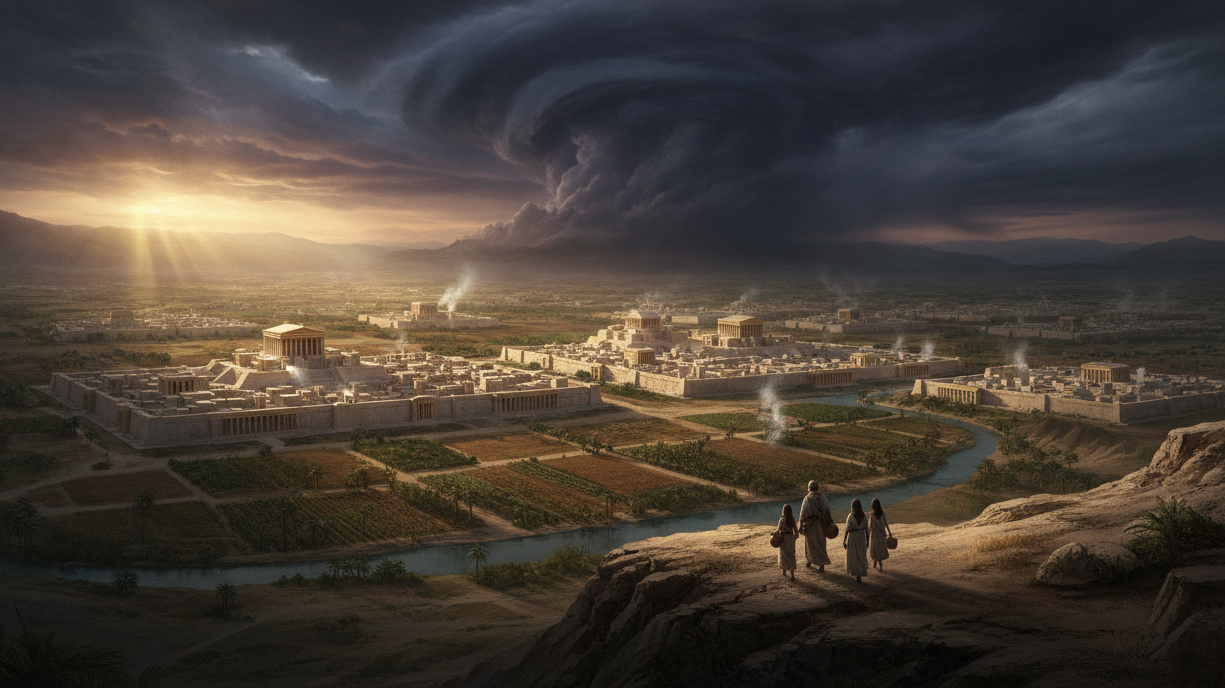
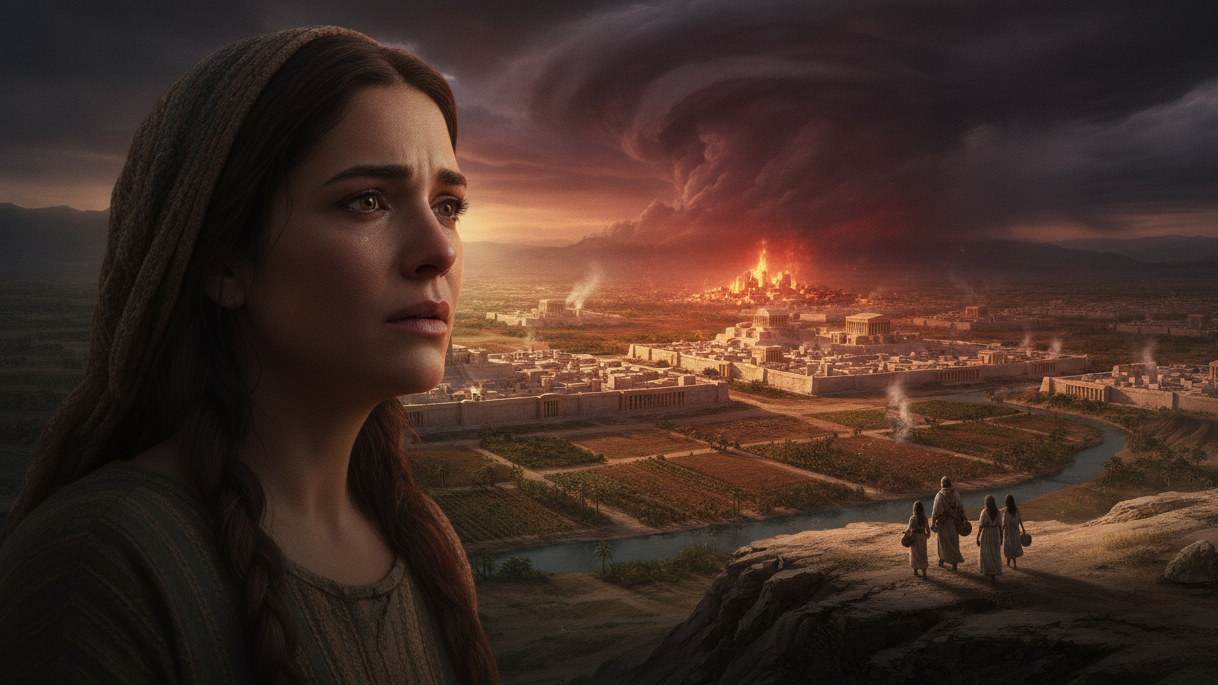
    Few events in the Bible are as startling—or as brief—as the account of Lot’s wife. Lot’s wife turning into a pillar of salt after looking back as God’s judges Sodom and Gomorrah is one of the Bible’s biggest mysteries. As God rescued Lot and his family from the doomed cities of Sodom and Gomorrah, they received one simple command:

    “Escape for your life! Do not look behind you, nor stay anywhere in the plain. Escape to the mountains, lest you be destroyed.”

    Genesis 19:17

    Yet only a few verses later, we read that Lot’s wife did not obey God’s command and turned into a pillar of salt:

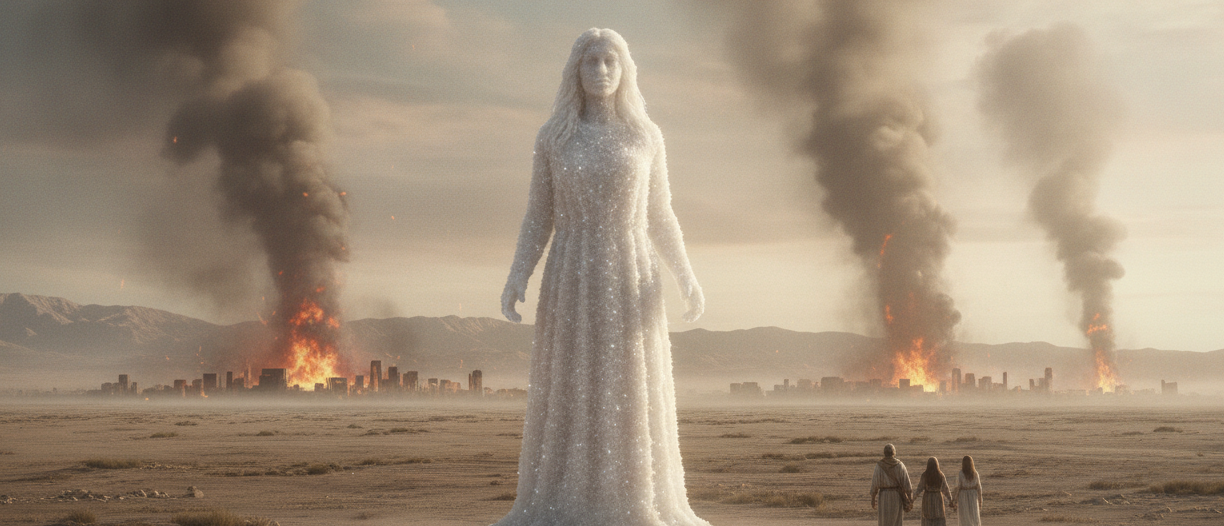
    “But Lot’s wife looked back behind him, and she became a pillar of salt.”

    Genesis 19:26

    But why would simply looking back result in such a severe judgment? Indeed, if our cities or houses were burning and we left behind many prized possessions, we might also look back. It seems that this brief event might be revealing something deeper about how God judges.

    To answer these questions, we must look beyond the surface of the story and understand the pattern of God’s dealings with humanity. In this post, we look at how God judges, how He warns His people, and we try to unpack the mystery of Lot’s wife.


    God does Not Judge Without Warning

    One of the great principles found throughout Scripture is that God reveals His intentions before He acts. God does not reveal them to just anyone, but to His people of mission. The prophet Amos writes:

    “Surely the Lord GOD does nothing, unless He reveals His secret to His servants the prophets.”

    Amos 3:7

    In the same way, before Sodom was destroyed, God spoke with Abraham. In fact, God said:

    “Shall I hide from Abraham what I am about to do?”

    Genesis 18:17

    What follows is one of the most remarkable conversations in the Bible. Abraham intercedes for the city, asking whether God would spare it if righteous people could be found there. God agrees that He would, even if there were only ten righteous people in the city.

    This reveals something essential about God’s character. God is not eager to destroy, but rather, He is eager to save. Even as judgment approached, despite all the sins of the city, God was still listening to Abraham’s intercession and extending mercy.


    Sodom Had Reached the Point of Judgment

    Genesis describes the two cities, Sodom and Gomorrah, as exceedingly wicked. The Lord said to Abraham:

    “Because the outcry against Sodom and Gomorrah is great, and because their sin is very grave…”

    Genesis 18:20

    This “outcry” against Sodom and Gomorrah was not the result of a single act of wrongdoing. Like the world before Noah’s flood, the cities’ corruption had become deeply rooted. The prophet Ezekiel later explains that Sodom’s sins included pride, selfishness, neglect of the poor, and detestable practices.

    “This was the guilt of your sister Sodom: she and her daughters had pride, excess of food, and prosperous ease, but did not aid the poor and needy. They were haughty and did an abomination before Me.”

    Ezekiel 16:49–50

    God’s judgment therefore came after prolonged wickedness—not impulsive anger. We can imagine that God was sitting in Heaven, looking down at these cities for a long time before deciding to render judgment.


    God First Provided a Way of Escape

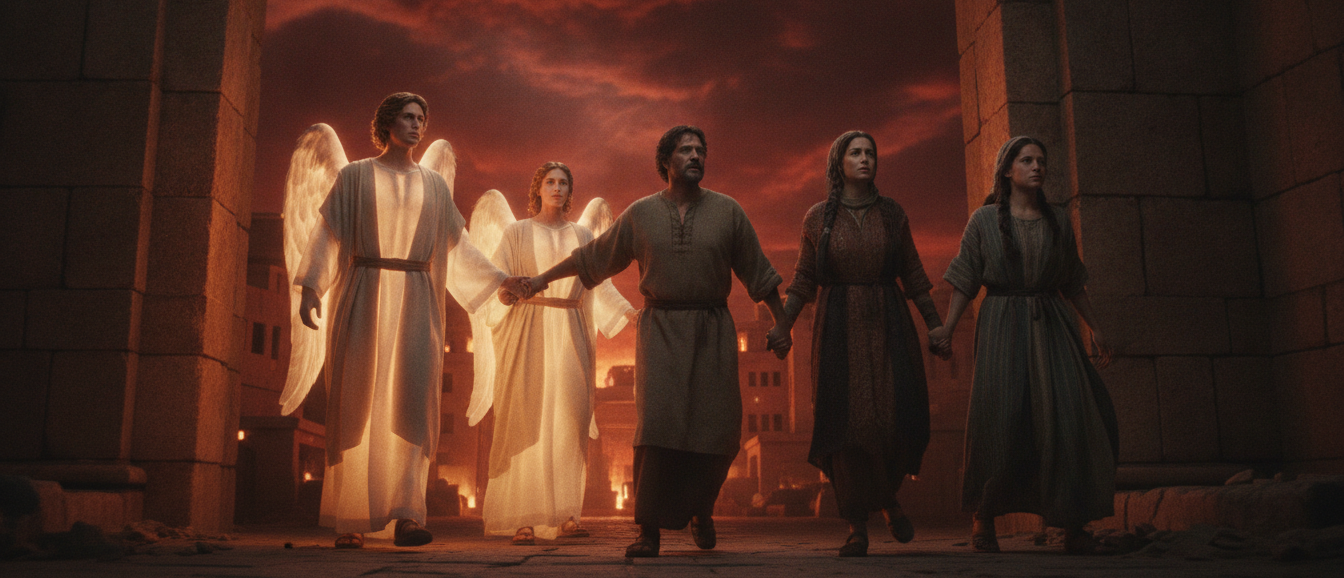
    In keeping with His methods of warning His people of mission first, before fire fell from heaven, God sent angels to rescue Lot and his family. As fire was falling from the sky, the angels urgently warned Lot and his family:

    “Up! Take your wife and your two daughters who are here, lest you be swept away in the punishment of the city.”

    Genesis 19:15

    Yet even then, Lot hesitated. Genesis tells us:

    “And while he lingered, the men took hold of his hand, his wife’s hand, and the hands of his two daughters, the LORD being merciful to him…”

    Genesis 19:16

    What an incredible statement. This makes us reflect: if I were in Lot’s situation, would I also hesitate leaving everything behind? Would I also look back and watch all my life’s possessions burn?


    The rescue itself was an act of mercy.

    Even when Lot delayed, God reached out and led them toward safety. This pattern should sound familiar if you know the story of Noah and the ark. Before the flood, God provided the ark through telling Noah to build it. Likewise, before the destruction of Sodom, God provided an escape. In essence, before judgment comes, God provides salvation.


    What Did It Mean That Lot’s wife “Looked Back”?

    Many people imagine that Lot’s wife merely glanced over her shoulder and looked back. But the context suggests something much deeper. The command that God gave them was clear:

    “Do not look behind you.”

    Genesis 19:17

    The Hebrew idea behind “looking back” carries the sense of turning one’s attention or regard toward something, not just physically looking behind you. Jesus Himself explains the spiritual meaning centuries later. Speaking about His return, He gives a surprising warning:

    “Remember Lot’s wife.”

    Luke 17:32

    Why would Jesus tell His disciples to remember such a brief event? Because He immediately continues to say:

    “Whoever seeks to preserve his life will lose it, but whoever loses his life will keep it.”

    Luke 17:33

    Jesus reveals that Lot’s wife represents something far deeper than curiosity. She physically left Sodom, but her heart remained there. Her body was moving toward salvation, but her affections were still attached to the world she was leaving behind.


    A Warning About the Human Heart

    Not only in this story, but throughout Scripture, God is concerned not merely with outward actions but with the condition of the heart. Jesus taught:

    “For where your treasure is, there your heart will be also.”

    Matthew 6:21

    Lot’s wife had been offered deliverance. Yet at the critical moment, something behind her still held her attention. In this way, her story becomes a warning about divided loyalty. Leaving behind sin is not merely a matter of changing location, but it is a deeper action connected to the heart. Turning back requires a changed heart.


    Judgment and Mercy Meet Together

    Many people read the account of Lot’s wife and conclude that God acted harshly. Yet when we step back, we see it is in fact the opposite.

    1. God had warned Abraham.
    2. God investigated the city.
    3. God listened to intercession.
    4. God sent angels.
    5. God physically led Lot’s family out.
    6. God repeatedly urged them to flee.

    Every step demonstrates patience and mercy before judgment finally arrived. This reflects the heart of God revealed elsewhere in Scripture. The Lord declares:

    “As surely as I live… I take no pleasure in the death of the wicked, but rather that they turn from their ways and live.”

    Ezekiel 33:11

    Likewise, Peter writes:

    “The Lord is not slow concerning His promise… but is patient toward you, not wishing that any should perish, but that all should come to repentance.”

    2 Peter 3:9

    As we can see from these scripture and this event, judgment was never God’s first desire. Salvation was. However, salvation required trusting God’s word completely.


    Why Salt?

    One of the most frequently asked questions is why Lot’s wife became a pillar of salt. The Bible does not explicitly explain why salt was chosen. Rather than speculating beyond Scripture, it is wise to acknowledge that the text leaves this detail unexplained.

    What the Bible does emphasize is the consequence of turning back after being called to safety. Throughout Scripture, physical events often become lasting signs that point to spiritual realities. Lot’s wife became a permanent reminder that hearing God’s warning is not enough.

    We must respond in faith.


    A Lesson for Every Generation

    Jesus did not tell us to remember Noah’s ark in the context of Judgment. Rather, He specifically said:

    “Remember Lot’s wife.”

    Luke 17:32

    Why does Jesus refer to Lot’s wife? Because the temptation to look back still exists. When God calls people out of darkness into His kingdom, there is always the temptation to cling to what must be left behind. The story is therefore not merely about one woman in one ancient city.

    The story of Lot’s wife is about every person who hears God’s call and must choose to trust Him completely. Just as God called Lot and his family out of Sodom and Gomorrah, God calls us every day and we must choose to respond to His call.


    Questions Worth Exploring Further

    The account of Sodom raises many fascinating questions:

    Why did Abraham negotiate with God?
    What does this reveal about God’s justice?
    What exactly were the sins of Sodom?
    Why did God send angels instead of acting immediately?
    Why was Lot rescued despite his weaknesses?
    What is the significance of becoming a pillar of salt?
    How does Jesus connect this story to His second coming?

    These questions deserve careful study because they reveal not only the meaning of one historical event but also the consistent character of God throughout Scripture.


    Final Reflection

    Lot’s wife was not turned into salt because God delights in punishment. Her story stands as a solemn reminder that salvation requires trusting God’s word without looking back.

    Throughout Scripture, God follows a consistent pattern. God first reveals His plans. Then He warns. Then, most importantly, God extends mercy and provides a way of escape. Only then does judgment come.

    That pattern began long before Sodom, continued through Noah, was seen again in Egypt, echoed through the prophets, and ultimately points us to Christ Himself—the One through whom God has provided the final and complete way of salvation.

    The question is no longer simply, “Why did Lot’s wife look back?” The deeper question is: when God calls us forward, will we trust Him enough not to look back?


    Do you want to know how to trust god when he tries to save you?

    If you’ve ever wanted to move beyond familiar Bible stories and understand the deeper message they reveal, we invite you to join us as we continue unlocking the Bible—one question at a time.

  • Why Did God Destroy the World with a Flood?

    Why Did God Destroy the World with a Flood?

    If you read the account of Noah’s flood, one question almost immediately rises to the surface: why would God destroy the entire world with a flood?

    To many readers, this event feels extreme—especially when viewed through a modern lens that associates judgment mainly with punishment or anger. But Scripture presents something far deeper than a simple act of destruction. The flood reveals a consistent biblical pattern: God warns, God offers salvation, and God judges only after persistent human rebellion.

    To understand Noah’s flood, we need to understand the world that led up to it—and the character of the God who sent it. At Noah’s time, it was a world that had reached a breaking point. Genesis describes the condition of humanity in stark terms:

    “The LORD saw how great the wickedness of the human race had become on the earth, and that every inclination of the thoughts of the human heart was only evil all the time.”

    Genesis 6:5

    This scripture is not describing isolated wrongdoing. It is describing a moral collapse at a global scale. The text continues:

    “Now the earth was corrupt in God’s sight and was full of violence.”

    Genesis 6:11

    The picture is one of unchecked corruption, violence, and moral distortion spreading through society. Humanity was not merely struggling with sin—it had become saturated in it. At this point, the Bible introduces a critical truth: God does not act impulsively.

    God Always Reveals Before He Judges

    One of the most important principles in scripture is found in the book of Amos:

    “Surely the Lord GOD does nothing, unless He reveals His secret to His servants the prophets.”

    Amos 3:7

    Before God acts in judgment, He first speaks. This pattern is consistent throughout the Bible, as we saw in Sodom and Gomorrah and the story of Lot’s wife. God’s judgment is never random and never without prior revelation, as we see in many Bible stories:

    • Noah was warned long before the flood arrived.
    • Abraham was informed before Sodom was judged.
    • Moses was sent before the plagues came upon Egypt.
    • Prophets warned Israel and Judah before exile.
    • Jesus warned Jerusalem before its destruction.

    In the case of Noah’s flood, the warning came in the form of both words and action. God told Noah to build the art, and the ark itself stood as a visible, decades-long warning that judgment was coming and salvation was available. While Noah built the ark, Scripture describes him as a “preacher of righteousness” (2 Peter 2:5), meaning the world was given enough time to respond by repentance.

    Judgment Is Not What People Often Think It Is

    In modern thinking, judgment is usually equated with punishment. But in Scripture, judgment is more complex. It is not merely retribution—it is the righteous action of God bringing truth, justice, and moral order into a corrupt situation. Even more importantly, God’s judgments often serve a restorative purpose. The writer of Hebrews explains:

    “For whom the Lord loves He chastens, and scourges every son whom He receives.”

    Hebrews 12:6

    And again:

    “He disciplines us for our good, that we may share in His holiness.”

    Hebrews 12:10

    This reveals something essential: divine discipline is not rooted in hatred, but in love aimed at restoration. Even in judgment, God’s ultimate desire is not destruction but correction. This is made even clearer in Ezekiel:

    “As surely as I live… I take no pleasure in the death of the wicked, but rather that they turn from their ways and live.”

    Ezekiel 33:11

    God’s heart is not to destroy, but to call people back to life. Judgment, therefore, is not the opposite of salvation—it is often the means through which salvation is made clear, necessary, and possible.

    The Flood as Both Judgment and Salvation

    The flood is often remembered as an act of destruction, but Scripture also presents it as an act of preservation. As Peter reflects on Noah’s time, he writes that:

    “God waited patiently in the days of Noah while the ark was being built… In it only a few people, eight in all, were saved through water.”

    1 Peter 3:20

    The emphasis is striking: God waited patiently, salvation was available and only those who responded were saved. The ark was not only a vessel of escape—it was an invitation into safety while judgment approached. This reveals a consistent biblical principle: before judgment, God provides a way of salvation.

    The flood was not the first expression of God’s will. It was the final response after long patience, repeated warnings, and people’s continued rejection of righteousness.


    Why Noah Was Saved

    Genesis offers a simple but profound statement about Noah:

    “But Noah found favor in the eyes of the LORD.”

    Genesis 6:8

    Noah was not without sin. Rather, he was faithful in a generation that had turned away from God. In contrast to widespread corruption, Noah responded to God’s word with obedience. His life became a living contradiction to the world around him. And through Noah, God preserved not only a family—but the continuation of His redemptive plan for humanity.

    Why This Matters for Understanding Judgment

    When we combine these passages, a clearer picture emerges:

    • God sees corruption and injustice.
    • God speaks through warning before acting.
    • God provides a way of escape before judgment.
    • God does not delight in destruction.
    • God disciplines in order to restore.
    • God preserves those who respond in faith.

    The flood is not an isolated story. It is part of a repeated pattern throughout Scripture. Judgment is never the first word. It is always preceded by warning. And it always exists within a larger redemptive purpose.

    A Question That Still Remains

    The account of Noah’s flood raises further questions that are not immediately resolved in a surface reading of the text:

    • How extensive was the flood?
    • Was it global in scope, or regional in extent?
    • What does Scripture mean when it describes “all the earth”?
    • How does the flood relate to other acts of divine judgment in history?
    • Why does water function as the instrument of judgment in this event?

    These are not secondary details—they shape how we understand the scale and meaning of the flood itself. In our Bible study, we explore these questions in depth, carefully examining the language of Scripture, the theological patterns across the Bible, and the implications of a global versus regional interpretation.

    Final Reflection

    The flood was not an act of uncontrolled anger. It was the culmination of a long process of patience, warning, and invitation—followed by righteous judgment on a world that had become overwhelmingly corrupt. Yet even in judgment, God provided salvation.

    The ark stands as one of the clearest pictures in Scripture of this truth: God judges sin, but He also provides a way of escape. This pattern does not end with Noah. It continues throughout the Bible—and ultimately points forward to God’s ongoing call for humanity to turn back to Him while mercy is still available.


    did god really flood the entire earth at Noah’s time?

    While we might be able to understand God’s reasons for judgment more clearly, you might still wonder of God really destroyed the entire humankind at Noah’s time. Join our Bible study as we explore these and other questions through scripture.