
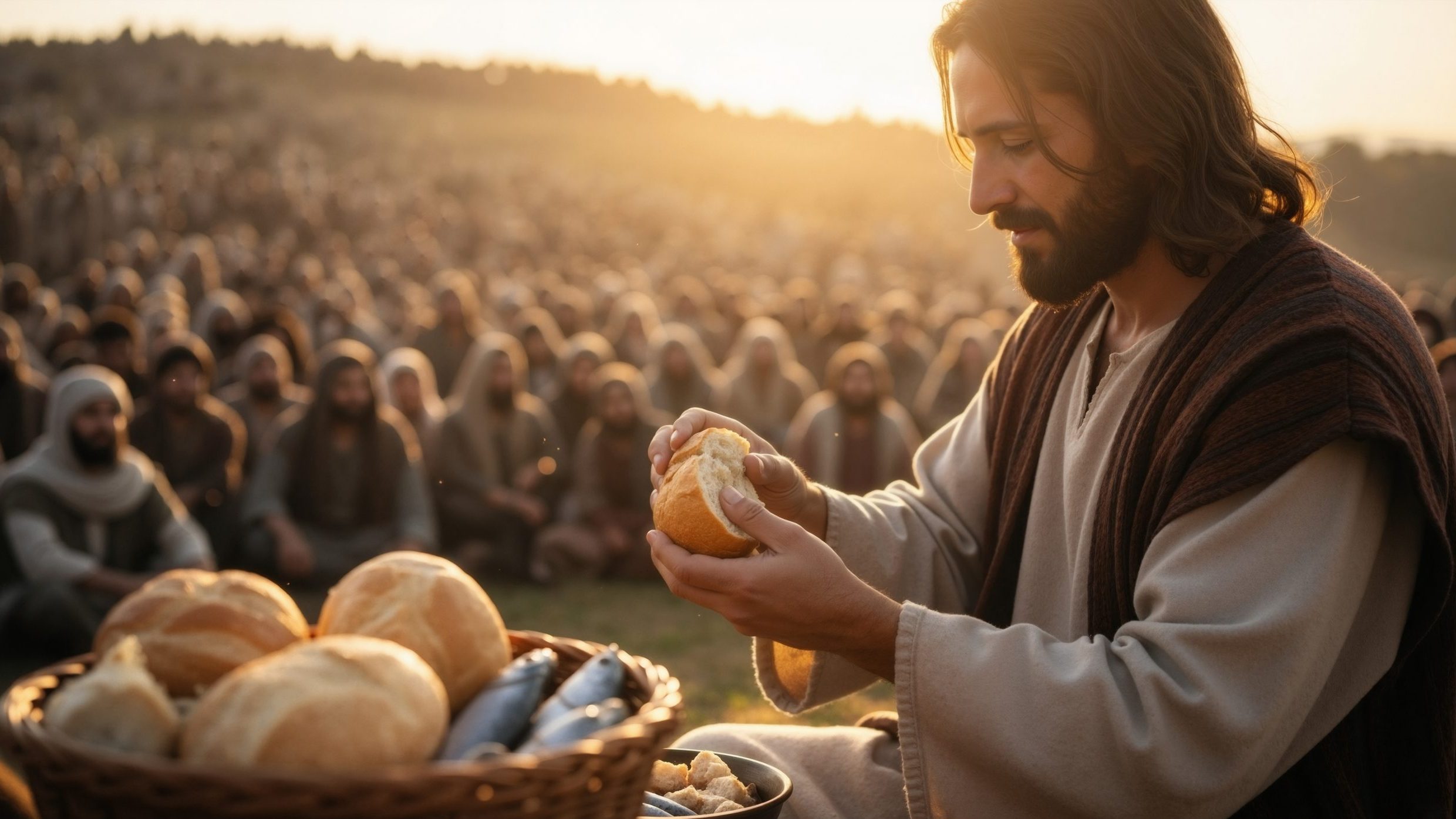
One of the most famous miracles in the Bible is when Jesus multiplies bread and fish. This miracle is so important, that it is mentioned seven times across the four gospels. Different accounts of Jesus multiplying bread are written by the disciples, and it comes up as a topic of conversation among them often.
But what does this miracle mean? And why is it so important? This miracle is even more mysterious, because most people would agree that bread multiplying goes against the laws of physics. According to the principle of the conservation of mass, tangible things cannot be fabricated out of thin air.
If Jesus walked among us as a human being, then surely Jesus is subject to the same laws that govern our lives. In this post, let’s look at some of the many scriptures in the Bible that talk about bread. Join me as we try to figure out, how did Jesus multiply bread?
One of the accounts of the miracle of Jesus multiplying bread can be found in the Gospel of Luke:
10 When the apostles returned, they reported to Jesus what they had done. Then he took them with him and they withdrew by themselves to a town called Bethsaida, 11 but the crowds learned about it and followed him. He welcomed them and spoke to them about the kingdom of God, and healed those who needed healing.
12 Late in the afternoon the Twelve came to him and said, “Send the crowd away so they can go to the surrounding villages and countryside and find food and lodging, because we are in a remote place here.”
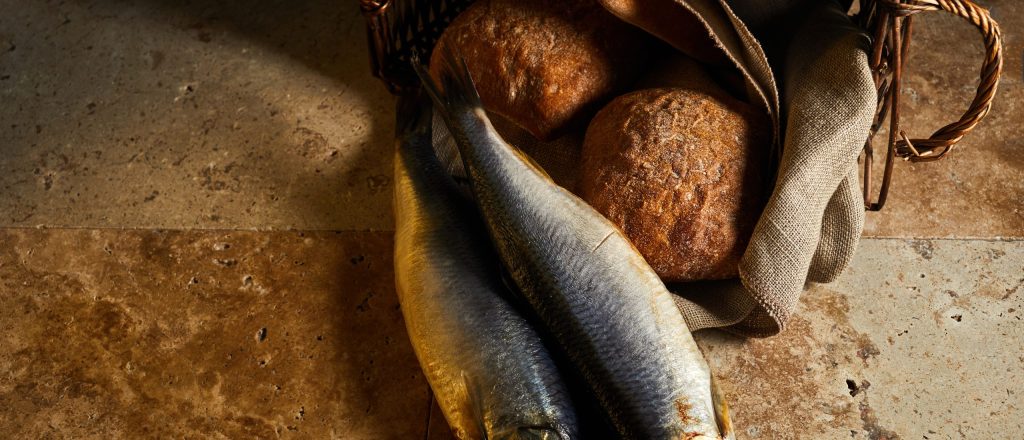
13 He replied, “You give them something to eat.” They answered, “We have only five loaves of bread and two fish—unless we go and buy food for all this crowd.” 14 (About five thousand men were there.)
But he said to his disciples, “Have them sit down in groups of about fifty each.” 15 The disciples did so, and everyone sat down. 16 Taking the five loaves and the two fish and looking up to heaven, he gave thanks and broke them. Then he gave them to the disciples to distribute to the people. 17 They all ate and were satisfied, and the disciples picked up twelve basketfuls of broken pieces that were left over.
Luke 9:10-17
This miracle is recorded again in the Gospel of John, with a few additional details:
5 When Jesus looked up and saw a great crowd coming toward him, he said to Philip, “Where shall we buy bread for these people to eat?” 6 He asked this only to test him, for he already had in mind what he was going to do.
7 Philip answered him, “It would take more than half a year’s wages to buy enough bread for each one to have a bite!” 8 Another of his disciples, Andrew, Simon Peter’s brother, spoke up, 9 “Here is a boy with five small barley loaves and two small fish, but how far will they go among so many?”
10 Jesus said, “Have the people sit down.” There was plenty of grass in that place, and they sat down (about five thousand men were there). 11 Jesus then took the loaves, gave thanks, and distributed to those who were seated as much as they wanted. He did the same with the fish.
12 When they had all had enough to eat, he said to his disciples, “Gather the pieces that are left over. Let nothing be wasted.” 13 So they gathered them and filled twelve baskets with the pieces of the five barley loaves left over by those who had eaten.
John 6:5-12
There are a few interesting details about this miracle in these two scriptures. First, both scriptures indicate that “about five thousand men were there”. Since only men over the age of 21 were counted, we can assume that there was an equal amount of women present, as well as some children under the age of 21. We can therefore estimate that about 12 000 people ate from a few loaves of bread and two fish.
Another detail is that despite this many people eating, both scriptures say that “twelve baskets” of barley loaves were left over by those who have eaten. This number is curious, because Jesus also had twelve disciples. Another interesting detail can be found in the account by John, only a few verses later:
14 After the people saw the sign Jesus performed, they began to say, “Surely this is the Prophet who is to come into the world.”
John 6:14
So after this miracle, people immediately started to wonder whether Jesus is a prophet. This is strange, because prophets generally prophesy and teach people about God instead of performing great miraculous signs such as this one. In fact, the rest of John chapter 6 contains further comments about bread.
Throughout the Bible, Jesus teaches about the value of bread that does not rot; bread that lasts forever.
26 Jesus answered, “Very truly I tell you, you are looking for me, not because you saw the signs I performed but because you ate the loaves and had your fill. 27 Do not work for food that spoils, but for food that endures to eternal life, which the Son of Man will give you. For on him God the Father has placed his seal of approval.”
John 6:26-27
Jesus also talks about bread that God gives as opposed to bread given by people:
32 Jesus said to them, “Very truly I tell you, it is not Moses who has given you the bread from heaven, but it is my Father who gives you the true bread from heaven. 33 For the bread of God is the bread that comes down from heaven and gives life to the world.”
John 6:32-33
Jesus says that the bread that God gives is bread that does not spoil, and the bread that can grant eternal life:
49 Your ancestors ate the manna in the wilderness, yet they died. 50 But here is the bread that comes down from heaven, which anyone may eat and not die.
John 6:49-50
Finally, Jesus says that he is the bread of life and the bread that has come down from heaven. After Jesus says this, many of the Jews begin to argue amongst themselves and even some of Jesus’ disciples leave him.
51 I am the living bread that came down from heaven. Whoever eats this bread will live forever. This bread is my flesh, which I will give for the life of the world.”
John 6:51
Jesus’ sermon about bread recorded in John 6 is perhaps one of the most heart-felt of all his messages from the Gospels. This sermon reveals that people only interpreted Jesus’ words physically and could not see the spiritual reality that he was talking about. While people value bread that sustains the physical body, Jesus was talking about a spiritual bread that lasts forever.
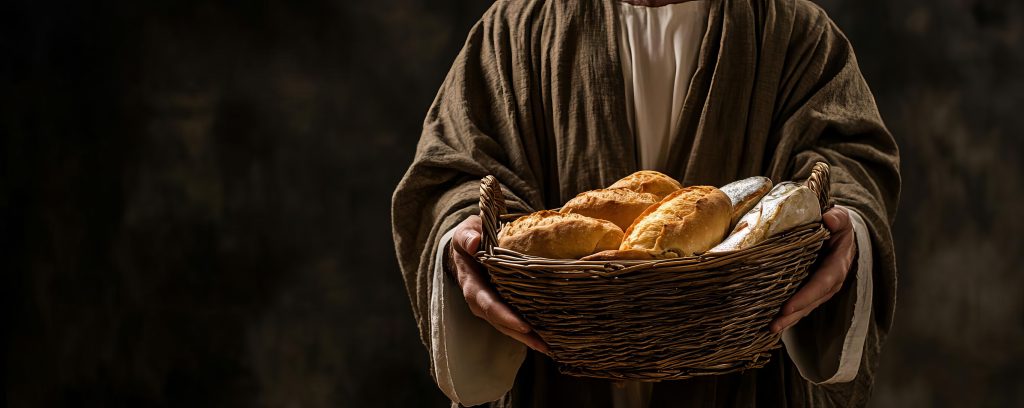
Through these scriptures, it is clear that bread plays an important role in the Bible. The Jews refer to the manna at Moses’ time, and Jesus gives an entire sermon about bread in John 6. To confuse things further, there is even more mention of bread in the other Gospels. When the disciples forget to take bread in Matthew, Jesus rebukes them:
8 Aware of their discussion, Jesus asked, “You of little faith, why are you talking among yourselves about having no bread? 9 Do you still not understand? Don’t you remember the five loaves for the five thousand, and how many basketfuls you gathered? 10 Or the seven loaves for the four thousand, and how many basketfuls you gathered? 11 How is it you don’t understand that I was not talking to you about bread? But be on your guard against the yeast of the Pharisees and Sadducees.”
Matthew 16:8-11
In this scripture, Jesus actually refers back to the miracle of multiplying bread. Here, Jesus tells them that they still don’t understand what it is about. If the disciples didn’t understand the miracle, it is possible that there is more to it for us too. Jesus says “How is it you don’t understand that I was not talking to you about bread?”.